rehab

Relapse Prevention Program: What Works in 2026
Uncategorized

Relapse Prevention Program: What Works in 2026

Thirty days in a facility. Medically supervised detox. Counselling sessions every morning. The family relieved, the patient feeling stronger than they have in years. Then comes week six back at home — a financial argument that doesn’t end, an old contact showing up uninvited, three nights of bad sleep in a row — and the ground gives way. Not because the treatment failed. Because what came after treatment wasn’t built for real life. A relapse prevention programme is the clinical structure that bridges the gap between leaving a facility and staying in recovery once daily pressures return. According to the U.S. National Institute on Drug Abuse, 40 to 60 percent of people with substance use disorder experience relapse at some point — a rate comparable to other chronic medical conditions like hypertension. That comparison matters: it reframes relapse not as personal failure but as a clinical outcome that a well-designed plan actively reduces. Getting the plan right — specific, personal, written, and revisited — is the work that determines whether treatment produces lasting change or just a temporary gap. Relapse Doesn’t Start the Day Someone Uses Again This is the single most misunderstood thing about the relapse process, and it’s why so many plans built around “recognising cravings” fail people who thought they were fine. Clinically, relapse moves through three distinct phases before any substance is touched. Each phase has observable signs — not vague emotional states, but specific, trackable behaviour changes. The value of knowing this is practical: the earlier in the sequence a person or their family identifies what’s happening, the easier it is to redirect. By the time cravings are intense and specific, the window for simple intervention has already narrowed considerably. The First Phase: Emotional Nothing about substance use is conscious yet. The person isn’t thinking about using. But their emotional patterns have started shifting back toward the conditions that preceded their addiction. They stop expressing what they’re feeling — frustration, loneliness, anxiety get compressed rather than processed. They start skipping the things that kept them anchored: therapy sessions, check-in calls with their support contact, the morning routine they built in treatment. Sleep becomes irregular. Appetite changes. They say they’re fine when they’re not. Families often notice this phase before the person themselves does — because the changes are external and visible. A plan built for this phase asks: what are this person’s specific early warning signs? Not a generic list of ten possibilities. The exact two or three changes that this individual shows when they’re moving toward emotional relapse, identified during therapy and named in writing. The Second Phase: Mental The internal conflict becomes conscious. The person starts thinking about using — not planning it necessarily, but the thoughts are there. Past experiences get replayed through a selective lens that filters out the consequences and holds onto the relief. They start bargaining with themselves: maybe once, maybe just to get through this week, maybe they have enough control now to handle it differently. Routes, people, and places connected to past use start feeling less threatening in the mind. This phase is where most families feel something is wrong but don’t know what to say. That silence — the unspoken concern, the walking on eggshells — often makes things worse. A working relapse prevention plan names this phase, describes what it looks and sounds like for this specific person, and gives the family a clear, non-confrontational action step. The Third Phase: Physical Actual use. Most relapse prevention content in Pakistan treats this as the starting point. It isn’t — it’s the outcome of the first two phases going unaddressed, and it’s the hardest phase to redirect because the momentum has already built over days or weeks. Understanding this sequence reshapes what “having a plan” means. A plan that only prepares for cravings is already behind. A plan that can catch the first phase — through specific personal warning signs and a named person to contact — has a fundamentally different success rate. Why Family Involvement Changes the Outcome Research conducted in Rawalpindi and Islamabad, published in a 2024 peer-reviewed study on social support and addiction recovery in Pakistan, found a direct correlation between perceived family support and quality of life among individuals in recovery — with a specific finding on what researchers call “expressed emotion” within households. High expressed emotion — defined as critical, hostile, or excessively involved family attitudes — is associated with significantly higher relapse rates. The pattern shows up in practice in two ways. The first is the family that responds to recovery with constant scrutiny: checking behaviour, asking pointed questions, monitoring every mood shift with visible anxiety. The intention is care. The effect is a pressure environment that mirrors the emotional suppression of Phase 1 relapse. The second is the family that responds with silence — carrying the fear of upsetting things, never mentioning the subject, leaving the person in recovery with no one to honestly talk to. Neither extreme works. What does work is structured family involvement built into the treatment plan itself — not a one-time orientation session, but ongoing family counselling that teaches specific communication approaches, identifies each family member’s role in the relapse prevention plan, and gives the household a shared language for the warning signs identified in the person’s individual plan. A 2024 study in the Journal of Substance Abuse and Addiction Treatment confirmed a positive correlation between relapse and family conflicts, friendships with individuals currently struggling with addiction, and the presence of addicted close relatives. For a Pakistani patient returning to an extended family household — where both stressors and social scrutiny can be intense — this isn’t background context. It’s a frontline clinical variable that the plan must address directly. The Shame Mechanism Nobody Explains — and Why It’s the Biggest Risk After a Lapse Most relapse prevention content ends at the lapse itself. Practical guidance on what happens in the hours immediately after — the moment with the most clinical significance — is
Best Depression Treatment Center Islamabad | 2026 Guide
Uncategorized

Best Depression Treatment Center Islamabad | 2026 Guide

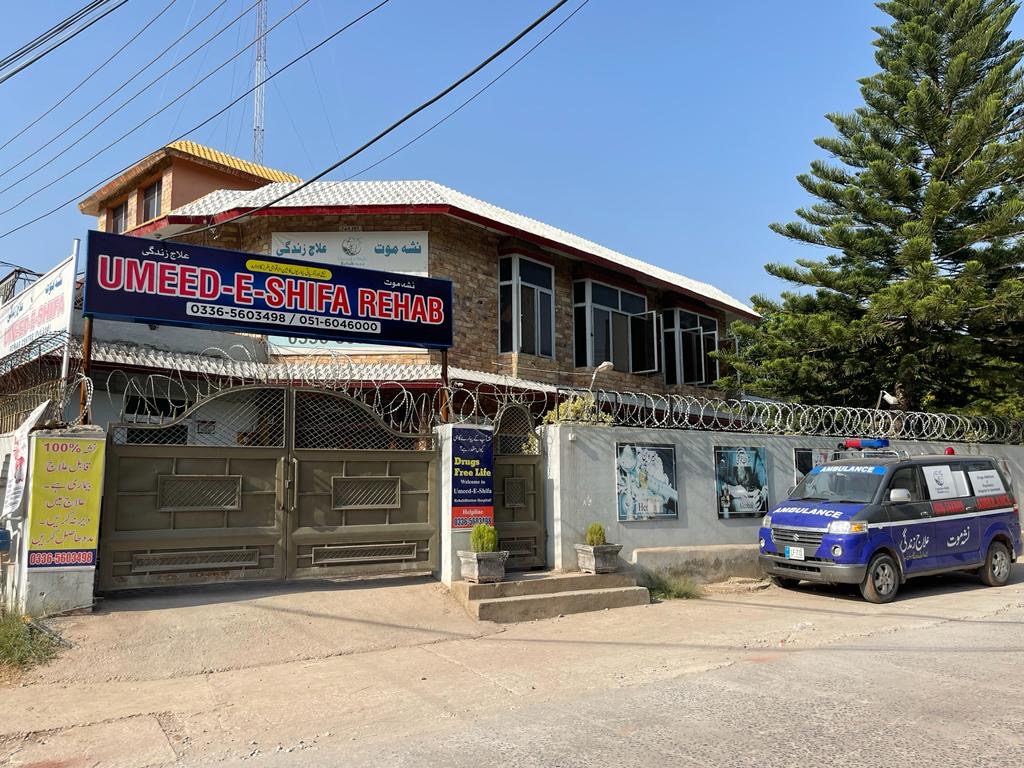
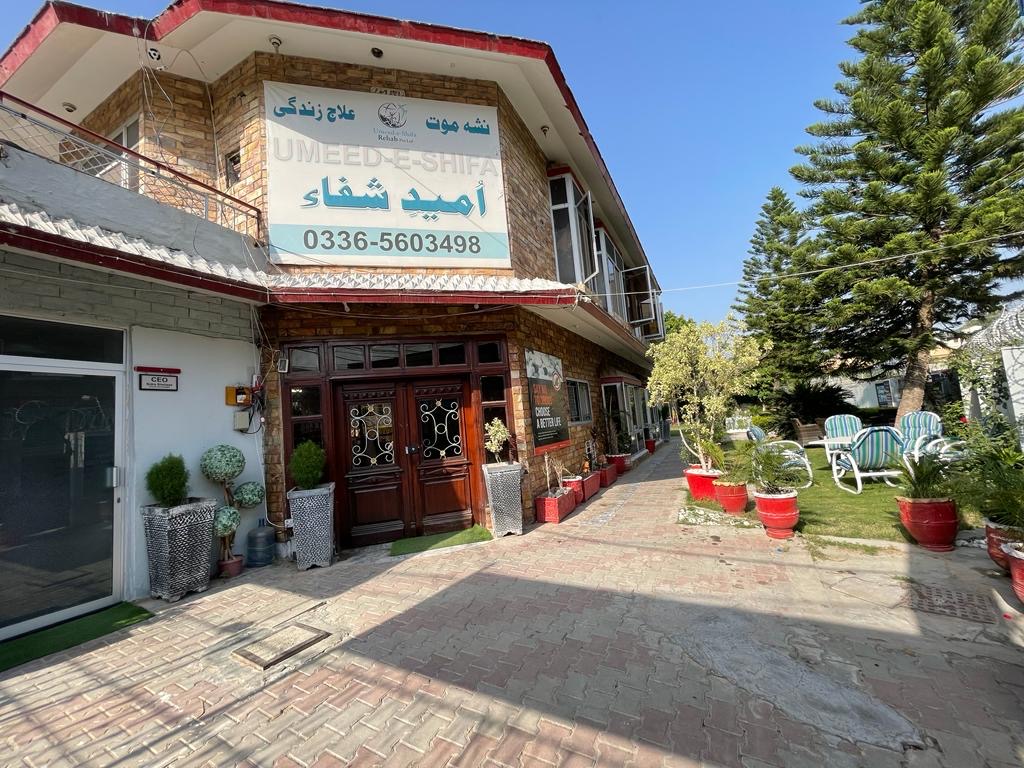
Three weeks of someone not getting out of bed will do that to a family — you end up searching for a depression treatment center in Islamabad at midnight, half-convinced you’re overreacting and half-convinced you’ve waited too long already. Most pages that show up will tell you depression is treatable and list a phone number. Neither tells you how to tell outpatient counseling apart from a center that actually needs to admit your relative, what a realistic budget looks like in Pakistan’s private mental health sector, or how to confirm a facility is legally allowed to operate. This guide answers those questions directly, using Umeed-e-Shifa Rehabilitation Center in Bani Gala as the working example, so you can make a decision instead of opening five more tabs. What Counts as a Depression Treatment Center, and Who Actually Needs One? A depression treatment center is a clinical facility that combines psychiatric assessment, structured therapy, and sometimes residential care to treat depression as a medical condition rather than a phase someone needs to push through. That distinction matters because it changes what “treatment” even means: not a single counseling session, but an assessment-driven plan that can include medication, psychotherapy, and follow-up over weeks or months. Not everyone with low mood needs this level of care. A bad month after a layoff or a breakup usually resolves with rest, support, and time. What separates ordinary sadness from clinical depression is duration and function: symptoms lasting two weeks or more, paired with a noticeable drop in work, sleep, appetite, or interest in things the person used to care about. Major depressive disorder is one specific diagnosis under this umbrella — persistent, severe, and disruptive enough to interfere with daily life for weeks at a stretch. A center becomes the right call, rather than a single psychiatrist visit, when one or more of these apply: the person has tried outpatient counseling without improvement, there’s a co-occurring issue like substance use, there’s any risk of self-harm, or the household simply can’t provide the structure recovery requires. Pakistan’s mental health infrastructure makes this judgment harder than it should be — a 2025 review in Cambridge Prisms: Global Mental Health cited an estimate of fewer than 500 psychiatrists serving a population of over 220 million, with only around 11 dedicated psychiatric hospitals nationwide (Dayani et al., 2024, as cited in Niazi et al., 2025). Demand routinely outpaces what individual clinics can absorb, which is exactly why dedicated centers with inpatient capacity exist. Outpatient Therapy vs. Residential Treatment: Which One Fits? Outpatient therapy works when the person can still function — going to work, managing basic self-care, sleeping through most nights — but needs structured psychiatric and psychological support to recover. Residential treatment becomes necessary when daily environment itself is feeding the depression, or when the symptoms have become severe enough that unsupervised time carries real risk. When Outpatient Therapy Is Enough If symptoms are moderate and the person has a stable home environment, weekly sessions combining psychiatric review with talk therapy — commonly cognitive behavioral therapy (CBT), which treats depression by restructuring negative thought patterns through guided weekly exercises — are often sufficient. This path costs less, disrupts work and family life far less, and lets the person practice coping skills in their actual daily context rather than a controlled facility. When Residential Care Becomes the Right Call Outpatient treatment tends to fail in a specific, predictable scenario: when the home environment is part of the problem. A patient going back each evening to the same financial stress, family conflict, or substance-use triggers that contributed to the depression in the first place often plateaus or relapses, no matter how good the weekly session was. Residential care removes that variable entirely for a defined period, which is also why Bani Gala — Islamabad’s hillside neighborhood with several rehabilitation facilities — has become a common location choice; distance from urban routine is treated as a clinical advantage, not just a scenic one. Factor Outpatient Therapy Residential / Inpatient Care Best for Mild to moderate depression, stable home life Severe depression, co-occurring substance use, unsafe home environment Typical structure Weekly psychiatric + therapy sessions 24/7 supervised care, daily structured programming Duration Open-ended, often 8–16 weeks minimum Defined programs, commonly 30 to 90 days Family involvement Optional, scheduled separately Usually built into the standard process Disruption to work/life Low High in the short term, often necessary for recovery Depression Treatment in Bani Gala, Islamabad: Inside Umeed-e-Shifa’s Model Umeed-e-Shifa Rehabilitation Center, located at House No. 1, Durrani Street, Main Jinnah Road, Bani Gala, runs a model built around dual-diagnosis care — meaning depression and substance use are treated as connected conditions rather than referred out to separate providers. That matters because untreated depression and substance use frequently reinforce each other, and splitting treatment across two unconnected providers is one of the more common reasons recovery stalls. How the Treatment Process Actually Runs The published process follows a sequence rather than a single appointment: Who’s on the Clinical Team The center lists Dr. Anwar Ul Haq, a consultant psychiatrist holding MRCPsych (UK) credentials, alongside Dr. Fatima Fayyaz as consultant psychologist and Dr. Sadia Sikandar as senior clinical psychologist, supported by medical officers and a clinical psychologist on staff. A psychiatrist on the team — not just psychologists — matters specifically because medication decisions, dosage adjustments, and diagnosing conditions that mimic depression (thyroid issues, for instance, can present with near-identical symptoms) require a medical degree, not just a counseling qualification. Is Umeed-e-Shifa the Right Fit, or Should You Look Elsewhere? No single center is correct for every case, and a fair comparison has to say so plainly. Where it fits well: Where it may not be the first choice: That last point is worth sitting with for a second: bigger and more structured isn’t automatically better. It’s better for the cases the structure was built to handle. What Depression Treatment Actually Costs in Islamabad Cost in Pakistan’s private mental health sector is rarely published upfront,

Severe Panic Attack Treatment in Islamabad (24/7)
Panic Attack Treatment, Psychiatrist, Rehab Center Islamabad

Severe Panic Attack Treatment in Bani Gala- Islamabad (24/7)

Your heart is pounding so hard you can count the beats. Your hands are numb. You genuinely believe something catastrophic is happening to your body. That moment that terrifying few minutes is a severe panic attack. And if you’re in Islamabad or nearby, Bani Gala, and it keeps happening, this article is for you. This piece covers severe panic attacks specifically the kind that send people to emergency rooms, that happen multiple times a week, and that don’t respond to breathing exercises alone. It does not cover mild or occasional anxiety. For that, our anxiety and panic disorder page goes deeper. What Actually Happens in a Severe Panic Attack? A severe panic attack is not weakness. It’s not drama. It’s your nervous system misfiring at maximum volume triggering a full fight-or-flight response when there is no threat in front of you. Physically, adrenaline floods your system within seconds. Your heart rate spikes. Breathing becomes shallow. Blood rushes to your limbs. Your digestive system shuts down. Some people experience chest pain intense enough to be confused with a cardiac event. Others feel their throat closing, their vision narrowing, or an overwhelming conviction that they are about to die. According to the WHO Pakistan mental health gap report, anxiety disorders including panic disorder affect a significant portion of Pakistani adults, yet fewer than 15% ever receive any form of clinical treatment. That gap isn’t because panic disorder isn’t serious. It’s because most people don’t know it’s treatable, or they’re too ashamed to say it out loud. So they suffer alone. Often for years. Is a Severe Panic Attack Dangerous? No and yes. That needs unpacking. A panic attack itself will not kill you. Your heart won’t stop. You won’t lose your mind. The episode, however terrifying, will pass usually within 10 to 30 minutes. But here’s what makes severe, recurring panic attacks genuinely dangerous: what they do to your life between episodes. People start avoiding the places where attacks happened. Then the situations. Then the activities. And then other people. This process called agoraphobic avoidance can shrink a person’s entire world within months. We’ve seen patients at our clinic in Bani Gala who hadn’t left their homes for weeks because the fear of the next attack had become more disabling than the attacks themselves. That’s when panic disorder stops being a discomfort and starts being a crisis. Why Do Severe Panic Attacks Keep Coming Back? This is the question families from Rawalpindi, DHA Islamabad, and Bahria Town ask us most often. Their family member had one panic attack, went to a hospital, was told their heart was fine and then had another. And another. The reason is neurological, not psychological weakness. Repeated panic attacks sensitise the brain’s threat-detection system specifically the amygdala making it progressively more likely to trigger a false alarm. Without treatment, the brain learns to panic. And it gets better at it. Dr. Anwar Ul Haq, our Consultant Psychiatrist at Umeed-e-Shifa, holds the MRCPsych a postgraduate psychiatric qualification awarded in the UK and one of the most rigorous psychiatric credentials in the world. He’s registered with the Pakistan Medical and Dental Council (PMDC). In his clinical assessment, recurring panic attacks almost always involve one of three underlying mechanisms: an untreated anxiety disorder, a co-occurring depressive episode, or in some cases a physical condition like thyroid dysfunction that is amplifying the nervous system’s reactivity. Proper assessment separates these. Guesswork doesn’t. What Families Need to Know — Speaking Directly to You If you’re reading this as a parent, spouse, or sibling, you’re probably exhausted. You’ve watched someone you love have an episode that looked like a heart attack, you’ve taken them to hospitals, you’ve heard “everything is normal” and then it happened again. It’s frightening to watch. And it’s equally frightening not to know how to help. Here’s what we know from working with families: the instinct to reassure during a panic attack “you’re fine, calm down, breathe” is understandable but often makes it worse. The person in a panic attack cannot hear logic in that moment. What they need is calm presence, not correction. But more importantly what they need is treatment. Not management. Not coping tips. A proper clinical assessment that identifies what’s driving the attacks and builds a plan to stop them. All consultations at Umeed-e-Shifa Rehabilitation Center are handled with complete confidentiality. Nothing is shared with family members without the patient’s explicit consent, and nothing leaves the clinic. Families from across Islamabad choose us partly for this reason. And confidentiality matters — especially in Pakistani communities where mental health stigma still stops people from reaching out in the first place. How Is Severe Panic Attack Treatment Different From Regular Anxiety Treatment? Not every anxiety treatment works for severe panic disorder. This distinction matters, and it’s one that gets blurred in a lot of online advice. For mild anxiety, self-help strategies breathing techniques, mindfulness, regular exercise — can be genuinely effective. But severe, recurring panic attacks have typically progressed past the point where breathing exercises alone do anything. The nervous system is already in a chronic state of dysregulation, and you need clinical intervention to reset it. Treatment for severe panic disorder at a psychiatric level typically involves two parallel tracks. First: medication management. Specific medications not sedatives, not habit-forming tranquillisers can reduce the frequency and intensity of attacks significantly within 4 to 6 weeks. Dr. Muhammad Ilyas, our MBBS, MCPS Neuropsychiatric specialist, works alongside Dr. Anwar in assessing which approach is appropriate for each patient. Not every person needs medication. But for severe cases, it’s often the difference between function and complete withdrawal from daily life. Second: structured psychotherapy. Cognitive Behavioural Therapy (CBT) is the most evidence-supported psychological treatment for panic disorder. Dr. Fatima Fayyaz, our Consultant Psychologist, and Dr. Sadia Sikandar, our Senior Clinical Psychologist, deliver CBT specifically adapted for panic — targeting the thought patterns that amplify each episode and the avoidance behaviours that maintain the cycle. The combined approach psychiatric assessment plus psychological

Drug and Alcohol Treatment Centers in Islamabad (2026 Guide
Alcohol Addiction Treatment, detox center islamabad

Drug and Alcohol Treatment Centers in Islamabad (2026 Guide

A family member is struggling. You’ve watched it for months, maybe years. You’ve tried managing it at home and it hasn’t worked. Now you’re searching for a drug and alcohol treatment center in Islamabad and you’re realizing that not all of them are what they claim to be. Some are barely staffed. Some don’t have a licensed psychiatrist on-site. Some put everyone through the same generic program regardless of what substance is involved or what else is going on mentally. This guide tells you what a medically credible treatment center actually looks like, what questions to ask before you admit someone, and why Umeed-e-Shifa Rehabilitation Center in Bani Gala consistently stands out in the Islamabad market for families who need more than a basic detox. What Makes a Drug and Alcohol Treatment Center Legitimate? Not every facility that calls itself a rehabilitation center is operating to clinical standards. This is the part most online guides skip, and it’s the most important thing families need to understand before choosing. A legitimate drug and alcohol treatment center is a licensed, medically supervised facility that treats substance use disorders through evidence-based clinical protocols, individualized care, and qualified professional staff operating under a recognized regulatory framework. In Pakistan, the regulatory body governing rehabilitation facilities is the Islamabad High Court-recognized IHRA (Institutional and Home Rehabilitation Authority). Any center operating without IHRA compliance is functioning outside the legal and clinical framework. That’s not a technicality. It directly affects patient safety, confidentiality protections, and clinical outcomes. The Three Qualities That Actually Predict Treatment Outcomes Across addiction medicine literature, three facility-level factors consistently separate centers with strong recovery outcomes from those with high relapse rates. 1. Qualified clinical staff, not just counselors. A detox that isn’t medically supervised can be dangerous. Withdrawal from alcohol, opioids, or benzodiazepines can cause seizures, cardiac events, or psychosis. A real treatment center has physicians and a qualified psychiatrist who can manage these risks clinically, not just monitor them. 2. Individualized treatment plans. Generic programs treat the average patient, which is no one in particular. Opioid dependency, alcohol use disorder, cannabis addiction, and prescription drug dependency all have different withdrawal profiles, different psychological components, and different relapse triggers. A facility that runs every patient through the same 30-day program, regardless of substance or history, is not practicing evidence-based care. 3. Dual-diagnosis capability. According to a 2023 review published by the Pakistan Journal of Medical Sciences, a significant proportion of patients presenting for substance use treatment in Pakistan also carry undiagnosed co-occurring mental health conditions including depression, anxiety, PTSD, and bipolar disorder. A center without psychiatric and psychological capacity cannot treat these patients effectively. They will relapse, often quickly, because the underlying condition driving the addiction was never addressed. Drug and Alcohol Treatment Centers in Islamabad: What’s Actually Available Islamabad has a growing number of facilities advertising addiction treatment, but the clinical depth varies considerably. Families searching for drug treatment in Islamabad or alcohol treatment in Islamabad need to evaluate options on more than location and fee structure. Here’s a practical framework for evaluating any center before committing: Evaluation Criteria What to Ask Why It Matters Regulatory compliance Is the center IHRA-registered? Ensures legal operation and patient rights protection Medical staff Is a licensed psychiatrist on-site? Required for safe withdrawal management and dual diagnosis Treatment approach Are plans individualized or one-size-fits-all? Generic programs produce weaker long-term outcomes Dual-diagnosis support Can they treat addiction plus depression, anxiety, or PTSD? Untreated co-occurring conditions drive relapse Family involvement Are families included in the treatment process? Family support is a proven relapse prevention factor Aftercare planning Is there a structured plan for after discharge? The first 90 days post-discharge carry the highest relapse risk Program duration options Are there both 30-day and 90-day programs? Short programs work for some; complex cases need longer care Most families in Islamabad find out about these gaps after admission, not before. Asking these questions upfront saves both the financial cost and the emotional cost of moving a patient between facilities. Umeed-e-Shifa Rehabilitation Center, Bani Gala: A Clinical Overview Umeed-e-Shifa Rehabilitation Center is located at House No 1, Durrani Street, Main Jinnah Road, Bani Gala, Islamabad. It is one of the few facilities in the Islamabad region that meets all of the clinical criteria outlined above under a single roof. The center was established with a stated mission of delivering person-centered, evidence-based addiction and mental health care in full compliance with IHRA guidelines, national healthcare standards, and SECP regulations. That alignment to regulatory frameworks is not marketing language. It has real implications for how patient data is handled, how treatment decisions are documented, and what rights patients and families hold throughout the process. Clinical Team at Umeed-e-Shifa The clinical depth at Umeed-e-Shifa is what separates it from most competitors in the Islamabad market. The team includes: Having a UK-qualified psychiatrist alongside neuropsychiatric and clinical psychology capability means Umeed-e-Shifa can handle cases that other centers in Islamabad cannot. Dual-diagnosis patients, patients with co-occurring psychosis or bipolar disorder, and patients coming off complex polydrug use all require this level of clinical support to be treated safely and effectively. Addiction Types Treated at Umeed-e-Shifa Substance / Condition Treatment Approach Opioid dependency (heroin, codeine, tramadol) Evidence-based treatment with medication-assisted options Alcohol use disorder Medical detox, psychological counseling, relapse prevention Cannabis addiction Behavioral therapy and psychosocial support Stimulant use (methamphetamine, cocaine) Specialized rehabilitation with psychiatric oversight Prescription drug dependency Supervised tapering and individualized plan Tobacco and caffeine dependency Structured cessation programs Inhalant abuse Medical care and targeted counseling Co-occurring depression, anxiety, PTSD Dual-diagnosis treatment integrated with addiction care Bipolar disorder, schizophrenia, personality disorders Full psychiatric management alongside addiction treatment Prices and program inclusions may change. Contact Umeed-e-Shifa directly at 0310-4000444 or umeedeshifa.com for current program details and availability. Alcohol Treatment in Islamabad: Why It Requires Specific Clinical Attention Alcohol use disorder is frequently underestimated in Pakistan, partly because of social stigma and partly because the visible consequences tend to emerge later than with opioid or stimulant dependency.

Top Rehabilitation Centers in Islamabad
Rehab Center Islamabad

Top Rehabilitation Centers in Islamabad: 2026 Honest Guide

A family member is struggling. The situation is urgent. You search for top rehabilitation centers in Islamabad and find a list of names with no real way to tell one from another. No information about staff credentials, no clarity on what the treatment actually involves, no honest comparison of programs. That’s the reality for most families in Pakistan searching for addiction or mental health treatment in 2026. According to a United Nations report cited by Pakistan Today, Pakistan has approximately 7.6 million drug users, with the number growing by around 40,000 per year. Most families who need help have never navigated this process before. This guide gives you the specific questions to ask, the criteria that matter, and an honest look at what separates a credible rehabilitation center from one that offers a bed but not real treatment. What Makes a Rehabilitation Center Worth Choosing in 2026? Not all rehabilitation centers in Pakistan operate at the same standard. A rehabilitation center is a structured medical and psychological facility where individuals with substance use disorders or mental health conditions receive supervised treatment, therapy, and recovery support. The gap between centers varies significantly. Some facilities offer only detox, which manages physical withdrawal but does nothing for the psychological drivers of addiction. Others run dual-diagnosis programs that treat both the addiction and any co-occurring mental health conditions like depression, anxiety, or PTSD simultaneously. The clinical evidence strongly favors dual-diagnosis treatment for long-term recovery. In reviewing rehabilitation centers across Islamabad, the facilities that consistently produce better outcomes share four characteristics: IHRA regulatory compliance, qualified psychiatric and psychological staff, structured individualized treatment plans, and structured aftercare or relapse prevention support. Centers that lack even one of these elements show significantly weaker long-term recovery results. Top Rehabilitation Centers in Islamabad: What to Know Before You Decide Islamabad has several rehabilitation centers. Understanding what each type offers helps you match a specific patient’s needs to the right environment, rather than choosing based on proximity alone. IHRA-Registered Centers vs Unregistered Facilities The Islamabad-based Implementing Rules and Regulations of the Harm Reduction Act (IHRA) sets the regulatory framework for addiction treatment in Pakistan. IHRA registration means a center has been evaluated for minimum clinical standards, staff credentials, facility safety, and documentation practices. Choosing an unregistered facility is a significant risk. Without regulatory oversight, there is no independent verification of treatment methods, staff qualifications, or patient rights protection. Before making any decision, ask directly whether the center is IHRA-registered and request documentation. Any credible center will provide this without hesitation. Center Types by Treatment Model Center Type What It Offers Best For Detox-only facility Medical withdrawal management Short-term physical stabilization only Residential rehab (inpatient) 24/7 supervised structured treatment Severe addiction, co-occurring mental illness Outpatient program Scheduled therapy without residential stay Mild-moderate addiction, strong home support Dual-diagnosis program Treats addiction and mental health together Cases involving depression, anxiety, PTSD Individualized treatment plan facility Custom program per patient assessment Complex cases with multiple needs Umeed-e-Shifa Rehabilitation Center in Bani Gala, Islamabad offers both inpatient and outpatient options, dual-diagnosis support, and individualized treatment plans. The center operates under IHRA guidelines and maintains compliance with SECP and national healthcare standards. Umeed-e-Shifa Rehabilitation Center: A Closer Look Umeed-e-Shifa is located in Bani Gala, Islamabad, at House No. 1, Durrani Street, Main Jinnah Road. It is one of the few centers in the capital region that explicitly combines addiction treatment with psychological care under one structured program. The name reflects its founding purpose: umeed (hope) and shifa (healing). Treatment Programs The center runs three main structured programs: 30-Day Detox Program: Medically supervised detoxification and withdrawal management. This is the physical stabilization phase, designed to safely manage withdrawal symptoms under medical oversight. It’s the entry point, not the full solution. 90-Day Detox and Assessment Program with Effect Management: A significantly more complete program that goes beyond physical detox into psychological assessment, behavioral therapy, and the management of long-term effects of substance use. For most cases of moderate to severe addiction, this is the appropriate starting point, not the 30-day option. Individualized Treatment Plan: Customized programs built from a full medical and psychological assessment. This is the right choice for patients with complex histories, dual diagnoses, or previous unsuccessful treatment attempts. Substance Use Conditions Treated The center treats a full range of substance use disorders including opioid addiction, alcohol use, cannabis use, stimulant use (methamphetamine and cocaine), prescription medication dependency, inhalant abuse, and tobacco and caffeine dependency. Psychological Conditions Treated Beyond substance use, Umeed-e-Shifa provides clinical care for depression, anxiety, post-traumatic stress disorder (PTSD), stress-related disorders, schizophrenia, bipolar disorder, personality disorders, and sexual disorders. This dual capacity matters. In Pakistan’s addiction treatment context, a significant percentage of individuals seeking rehabilitation also have an underlying untreated psychological condition that directly drives the substance use. Treating only the addiction while leaving the underlying mental health condition unaddressed produces predictably poor long-term outcomes. The Medical and Clinical Team The clinical team at Umeed-e-Shifa includes: MRCPsych (UK) is the Membership of the Royal College of Psychiatrists, a UK-recognized postgraduate qualification. Having a consultant psychiatrist with UK credentials is materially different from facilities staffed primarily by counselors without clinical qualifications. Psychiatric oversight is what distinguishes medical treatment from supportive housing. What the Rehabilitation Process Actually Looks Like Most families searching for a top rehab center have no clear picture of what happens after admission. This section addresses that directly. Phase 1: Initial Assessment On admission, the patient undergoes a full medical and psychological evaluation. This assessment identifies the substance or substances involved, the severity and duration of use, any co-occurring mental health conditions, physical health status, and family and social context. The treatment plan cannot be effective without this assessment. Any facility that skips it or rushes through it is cutting a critical corner. Phase 2: Detoxification and Medical Stabilization Medically supervised detox manages the physical withdrawal process under clinical oversight. Depending on the substance, withdrawal can involve serious medical risks. At Umeed-e-Shifa, this phase is managed by qualified medical officers and

Alcohol Dependence Treatment
Alcohol Addiction Treatment

Alcohol Dependence Treatment: Real Help in Pakistan 2026

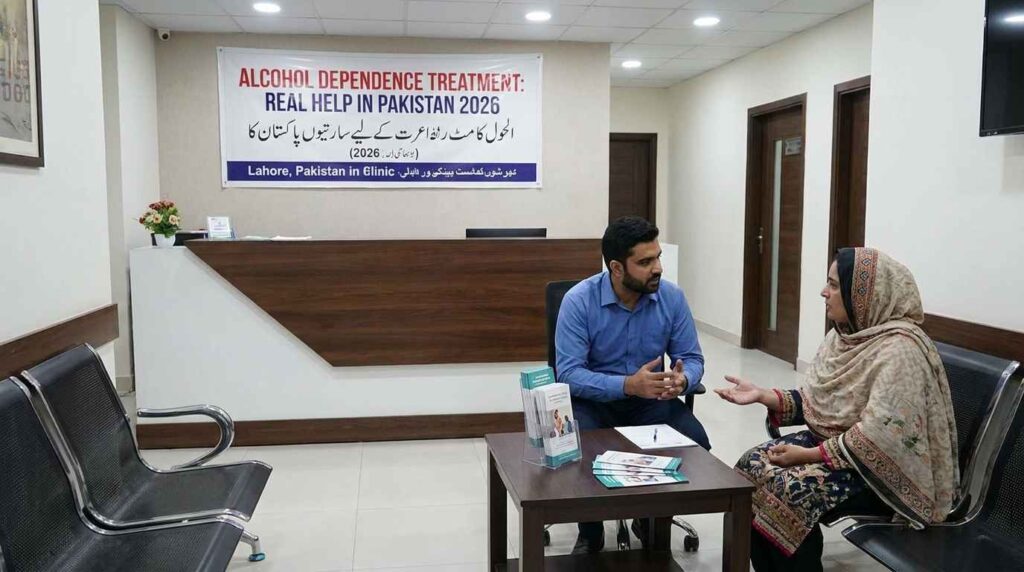
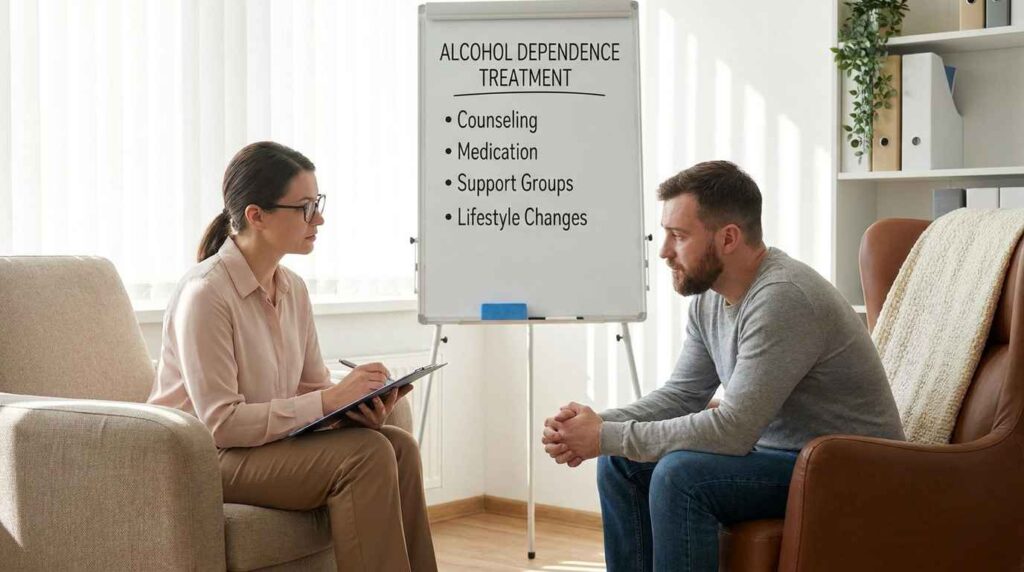
Someone you care about is drinking in a way that has stopped being a choice and started being a compulsion. Or maybe you are reading this about yourself, which takes a particular kind of courage. Either way, you are here because the situation is serious and the usual responses have stopped working. Alcohol dependence treatment in Pakistan is available, clinically structured, and more accessible than most families realize. The challenge is not the absence of options. It is understanding what real treatment involves, why it cannot be managed at home, what the medical risks are during withdrawal, and how to find a provider with the clinical depth to address the full picture, including the mental health conditions that almost always sit underneath a dependence problem. This guide gives you that clarity, without judgment and without false reassurance. What Alcohol Dependence Actually Is and Why It Requires Clinical Treatment Alcohol dependence is a chronic medical condition in which the brain and body have adapted physiologically to the presence of alcohol and require it to function without experiencing withdrawal symptoms. It is not a character failure, a spiritual weakness, or a matter of insufficient willpower. The World Health Organization’s 2022 Global Status Report on Alcohol and Health classified alcohol use disorder as a significant global public health condition affecting over 283 million people worldwide. In Pakistan, where alcohol use exists across socioeconomic strata despite legal restrictions, the condition remains substantially underreported and undertreated due to stigma. What distinguishes alcohol dependence from heavy drinking is the physiological component. A person who is alcohol dependent will experience withdrawal symptoms when they stop or significantly reduce drinking. Those symptoms range from anxiety, tremors, and insomnia at mild severity, to seizures and delirium tremens at severe severity. Alcohol withdrawal syndrome is one of the few substance withdrawal conditions that can be directly fatal without medical management. This is the clinical fact that makes home detox genuinely dangerous for anyone with significant physical dependence. Why Alcohol Withdrawal Requires Medical Supervision Alcohol withdrawal is a medical emergency for patients with significant physical dependence. This is the most important and most underestimated clinical reality in alcohol dependence treatment. The Danger of Unsupervised Detox When a person with significant alcohol dependence stops drinking abruptly, the central nervous system, which has adapted to the depressant effect of alcohol, becomes hyperactive in its absence. This produces a spectrum of withdrawal symptoms beginning within 6 to 24 hours of the last drink. Mild symptoms include anxiety, irritability, tremor, sweating, and insomnia. Moderate symptoms progress to elevated heart rate, elevated blood pressure, and nausea. Severe withdrawal, which occurs in approximately 5 percent of untreated cases according to data from the American Society of Addiction Medicine, produces seizures, hallucinations, and delirium tremens, a potentially fatal syndrome involving severe confusion, fever, and cardiovascular instability. Managing this spectrum safely requires physician oversight, vital sign monitoring, and medication including benzodiazepines such as diazepam or lorazepam to prevent and treat seizures. These are prescription medications that must be administered and monitored by qualified clinical staff. Home detox attempts, however well-intentioned, create genuine mortality risk for patients with severe dependence. What Medically Supervised Detox Involves Medically supervised alcohol detoxification is a structured clinical process lasting typically 5 to 10 days in which a physician monitors withdrawal symptom progression, administers medications to prevent seizures and manage discomfort, checks vital signs regularly, and manages any complications that arise. At Umeed e Shifa Rehabilitation Centre in Bani Gala, Islamabad, medical detox is the first phase of the residential treatment process. Patients are assessed at intake to determine withdrawal risk level, and a clinical protocol is tailored to the severity of their physical dependence. This is not the entirety of treatment — it is the medical foundation that makes therapeutic work possible. Detox addresses the physical dependency. It does not address the psychological drivers of drinking. Both require treatment. Centers that offer detox without a therapeutic program following it are providing incomplete care. The Mental Health Dimension That Most Alcohol Treatment Misses Alcohol dependence and mental health disorders co-occur at rates that make treating either one in isolation clinically inadequate. Understanding Dual Diagnosis in Alcohol Dependence Dual diagnosis is the simultaneous presence of alcohol use disorder and a co-occurring psychiatric condition. Depression, anxiety disorders, trauma-related conditions, and bipolar disorder are the most commonly co-occurring conditions in alcohol dependence cases seen at residential treatment centers across Pakistan. According to SAMHSA’s 2023 National Survey on Drug Use and Health, over 50 percent of individuals with a substance use disorder also meet diagnostic criteria for at least one co-occurring mental health condition. The causal relationship runs in both directions. Depression drives alcohol use as self-medication. Chronic alcohol use produces neurochemical changes that cause or worsen depression. Treating either without addressing the other reliably produces relapse. A rehabilitation center that assesses and treats both simultaneously through a dual diagnosis framework produces substantially better long-term outcomes than one treating addiction alone. How Umeed e Shifa Addresses Co-Occurring Conditions Umeed e Shifa Rehabilitation Centre’s clinical approach includes formal psychiatric assessment at intake. Where co-occurring depression, anxiety, PTSD, or other conditions are identified, the treatment plan incorporates psychiatric medication management, individual therapy using evidence-based modalities including Cognitive Behavioral Therapy, and group therapy sessions that normalize the experience and build coping capacity. This integration is what distinguishes a genuine rehabilitation center from a basic detox facility. The distinction matters enormously for long-term recovery outcomes. Verify current program details, availability, and pricing directly with Umeed e Shifa as program offerings change with operational updates. The Role of Therapy in Alcohol Dependence Treatment Medical detox creates the physiological window for therapeutic work. Therapy is what actually builds the skills, restructures the thought patterns, and addresses the underlying drivers that make sustained recovery possible. Cognitive Behavioral Therapy for Alcohol Dependence Cognitive Behavioral Therapy, CBT, is the most extensively evidenced psychological intervention for alcohol use disorder. The National Institute for Health and Care Excellence in the UK, whose clinical guidelines inform practice internationally, recommends CBT

Ice Drug Treatment Islamabad 2026 | Umeed e Shifa
ice addiction treatment

Ice Drug Treatment Islamabad 2026 | Umeed e Shifa

Two weeks without sleep. Jaw clenched. Skin crawling. Then the paranoia hits—someone is watching, following, waiting. This is ice withdrawal in Islamabad. Not a movie. Not someone else’s problem. Ice (crystal meth) has spread through the capital’s suburbs, hostels, and even some of its best neighborhoods faster than most families want to admit. The gap between recognizing the problem and finding real treatment kills people. Not metaphorically. Actually. This guide covers ice addiction treatment in Islamabad with zero motivational slogans. You will learn what medical detox looks like at Umeed e Shifa rehab center, what withdrawal feels like hour by hour, and why most attempts to quit alone fail within the first week. If someone you care about is using ice, read this now. If you are using ice, read it anyway. What Makes Ice Different From Other Drugs in Pakistan Ice is not heroin. The withdrawal timeline, the mental grip, and the relapse pattern are completely different. Heroin withdrawal is physically brutal but shorter. Ice withdrawal feels less like the flu and more like your brain has forgotten how to feel pleasure without the drug. That condition has a name: anhedonia. It lasts months, not days. Feature Ice (Crystal Meth) Heroin Primary withdrawal symptom Severe depression, anhedonia, paranoia Physical pain, vomiting, diarrhea Acute withdrawal duration 7–14 days 5–7 days Post-acute withdrawal syndrome 3–12+ months 1–6 months Relapse trigger Cravings + boredom + emotional crash Physical pain + cravings Medical risk during withdrawal Suicide, psychosis, dehydration Dehydration, cardiac issues Ice keeps the user awake for days. The body crashes hard. Then the user uses again just to feel normal. This cycle tightens fast—often within weeks, not years. In our work with families across Rawalpindi and Islamabad, the most common statement we hear is: “It happened so fast.” One month the person is functioning. The next month they have lost their job, sold their phone, and stopped answering calls. Ice Addiction Treatment Options in Islamabad Three pathways exist. Only one works reliably for ice. Option 1: Cold turkey at home The person stops using. No medical support. No supervision. This fails for ice nearly every time. The depression hits day three or four. Sleep does not come. The user convinces themselves “just one more time to get through this.” That one time resets everything. Option 2: Outpatient counseling The user visits a counselor weekly while living at home. This works only for very early stage use—someone who used ice three or four times, not daily. For daily users, outpatient lacks containment. The drug remains accessible. The cravings win. Option 3: Residential rehab (medical detox + structured care) The user stays at a facility like Umeed e Shifa rehab center Bani Gala. Medical staff manage withdrawal. No access to ice. Daily therapy. Structured routines. This is the only evidence-based pathway for moderate to severe ice addiction. The physical separation from the drug matters. The medical management of withdrawal matters more. Umeed e Shifa Rehab Center Bani Gala: What Treatment Actually Looks Like Umeed e Shifa rehab center operates in Bani Gala, Islamabad. The facility admits patients for ice addiction treatment with a clear protocol. Phase 1: Medical assessment (first 24 hours) A doctor evaluates the patient’s physical state. Ice use causes dehydration, malnutrition, dental problems, and in some cases, early kidney damage. The assessment identifies immediate medical risks. Phase 2: Medically supervised withdrawal (days 1–10) No medication completely stops ice withdrawal. However, certain medicines reduce the worst symptoms: The patient sleeps. Eats. Does not use ice. That is the entire goal of this phase. Phase 3: Rehabilitation and relapse prevention (days 11–45+) Withdrawal is not treatment. It is the price of admission. Real treatment at Umeed e Shifa rehab center Bani Gala includes: The patient learns to recognize triggers. More importantly, they learn what to do ten seconds before using again. Phase 4: Aftercare planning (last week of stay) No one walks out of rehab cured. They walk out with a plan. Aftercare at Umeed e Shifa includes scheduled follow-up calls, relapse emergency contacts, and family involvement in monitoring. For patients returning to the same neighborhood where they used, the plan needs to be specific—daily NA meetings, changed phone number, blocked contacts. What Ice Withdrawal Feels Like: A Real Timeline Honest expectations prevent relapse. Here is what days one through fourteen actually look like. Day Range Symptoms What Helps Days 1–3 Exhaustion, excessive sleep, hunger, irritability Sleep. High-protein meals. No demands. Days 4–7 Severe depression, anhedonia (no pleasure), strong cravings, anxiety Medical supervision critical. Suicide risk highest here. Days 8–10 Physical symptoms fade. Cravings remain intense. Mood unstable. Structured activities. Distraction. No idle time. Days 11–14 Mood lifts slightly. Energy returns. Cravings come in waves. Therapy starts working. Routine becomes possible. The patient will want to leave around day four or five. That is the addiction talking, not the person. Staff at any competent rehab center Bani Gala expects this and manages it. Why Most Families Choose Wrong and Wait Too Long Families in Islamabad delay ice addiction treatment for three predictable reasons. Reason 1: Shame “What will the neighbors say?” “What about rishtas for the other children?” Ice does not care about family reputation. By the time shame becomes the smaller problem, the user may have already stolen from the house, lost their university seat, or gotten into legal trouble. Reason 2: False hope in moderation “He can control it.” “He only uses on weekends.” Ice is not alcohol. Controlled use does not exist. The chemical structure of methamphetamine makes controlled use a fantasy. Every relapse study confirms this. Reason 3: Waiting for rock bottom Some families wait for the user to ask for help. Ice users often do not ask. The drug convinces them they are fine while their life falls apart. You do not need consent to start an intervention. You do not need the user’s agreement to contact Umeed e Shifa rehab center for guidance. The Bani Gala Factor: Why Location Matters for Recovery Umeed e Shifa

Alcohol Dependence Treatment in Pakistan: 2026 Guide
Alcohol Addiction Treatment

Alcohol Dependence Treatment in Pakistan: 2026 Guide

Someone in your family is drinking heavily and can’t stop. Or maybe it’s you. Either way, you’re searching in a country where this topic is publicly taboo and privately widespread — which makes finding real, honest information harder than it should be. Alcohol dependence treatment is not willpower. It’s a medical process. It requires detoxification, psychiatric support, behavioral therapy, and a structured aftercare plan. Without all four components, relapse rates are high — and in Pakistan, most people relapse because they accessed incomplete treatment or none at all. This guide covers what dependence actually is, what treatment looks like step by step, and how to choose a facility in Islamabad that delivers real clinical outcomes. What Is Alcohol Dependence — and How Is It Different From Heavy Drinking? Alcohol dependence is a medical condition in which the brain and body require alcohol to function normally. Without it, the person experiences physical withdrawal — tremors, sweating, anxiety, seizures in severe cases — not just discomfort or cravings. Heavy drinking is a behavior. Dependence is a neurological state. This distinction matters enormously for treatment. A heavy drinker can reduce or stop with counseling and motivation. A person who is physically dependent cannot safely stop without medical supervision. Attempting cold-turkey withdrawal from severe alcohol dependence without medical support can be fatal — seizures and a condition called delirium tremens (DTs) are genuine medical emergencies. According to a review published in the International Journal of Endorsing Health Sciences Research, out of an estimated 10 million alcohol users in Pakistan, approximately one million develop alcohol use disorders — a number that has grown as stress, urbanization, and economic pressure have increased across major cities including Islamabad, Karachi, and Lahore. The shame attached to alcohol use in Pakistan means most of these individuals never seek formal treatment. Families manage it in silence until a crisis forces action. The Four Stages of Alcohol Dependence Treatment Effective alcohol dependence treatment follows a clinical sequence. Skipping any stage dramatically reduces the chance of lasting recovery. Stage 1 — Medical Detoxification Detox is the process of clearing alcohol from the body under medical supervision. For anyone with physical dependence, this is not optional — it’s the foundation everything else is built on. During detox, a psychiatrist or addiction medicine physician monitors the patient for withdrawal symptoms and administers medications to manage them safely. The most commonly used protocol involves benzodiazepines — typically diazepam or lorazepam — which prevent seizures and reduce the severity of withdrawal. In severe cases, IV fluids, thiamine supplementation, and 24-hour monitoring are required. Detox typically takes 5 to 10 days depending on the severity of dependence and the patient’s physical health. It is not treatment in itself. It is preparation for treatment. A facility that calls detox the complete program is not offering adequate care. Stage 2 — Psychiatric Assessment and Dual Diagnosis Most people with alcohol dependence have an underlying condition driving the drinking — depression, anxiety, trauma, or stress-related disorders. In clinical practice, this is called a dual diagnosis or co-occurring disorder. If the psychiatric condition is not identified and treated alongside the addiction, the risk of relapse is very high. The patient gets sober, the underlying mental health issue resurfaces, and alcohol becomes the coping mechanism again. A proper psychiatric assessment at admission covers mental health history, family background, trauma, and current psychological state. Treatment then addresses both conditions simultaneously — not sequentially. Stage 3 — Behavioral Therapy and Counseling This is the longest and most critical phase. Behavioral therapy changes the thought patterns, triggers, and coping mechanisms that drive drinking behavior. The most evidence-supported approaches for alcohol dependence include: Cognitive Behavioral Therapy (CBT) — identifies and restructures the thought patterns that lead to alcohol use Motivational Enhancement Therapy (MET) — builds internal motivation for change, particularly effective in patients who are ambivalent 12-Step Facilitation — a structured peer support model originally from Alcoholics Anonymous, adapted in various clinical settings Family Therapy — addresses the family dynamics that often enable or trigger relapse In the Pakistan context, family involvement in therapy is particularly important. The family system plays a central role in both enabling addiction and in supporting recovery. Facilities that offer structured family counseling sessions produce better long-term outcomes than those that treat the patient in isolation. Stage 4 — Aftercare and Relapse Prevention Planning Recovery does not end at discharge. The first 90 days after leaving a residential facility are the highest-risk period for relapse. A solid aftercare plan includes scheduled follow-up psychiatric appointments, outpatient counseling, a documented relapse prevention strategy, and ideally a peer support network. Without this, even patients who complete a full residential program often relapse within weeks of going home. Ask any facility about their aftercare protocol before admission. If they can’t describe it clearly, that’s a gap in their care model. Umeed-e-Shifa Rehabilitation Center, Bani Gala, Islamabad Umeed-e-Shifa Rehabilitation Center is an addiction and psychiatric treatment facility located at House No. 1, Durrani Street, Main Jinnah Road, Bani Gala, Islamabad. Established in 2020, it is registered with SECP and the Islamabad Health Regulatory Authority (IHRA) — two credentials that matter when evaluating any Pakistani rehab facility. Bani Gala’s location is deliberate. Distance from the urban environment, social triggers, and easy access to alcohol is a well-established factor in residential treatment effectiveness. The quieter, greener setting reduces stimulation and supports the kind of psychological reset that early recovery requires. What Umeed-e-Shifa Offers The center provides treatment for substance use disorders including alcohol dependence, drug addiction, and prescription medication misuse, alongside psychiatric conditions. Their clinical team includes psychiatrists, medical doctors, clinical psychologists, and paramedical staff. Key treatment components offered: — Medical detoxification with psychiatric supervision — Individual and group counseling — Psychiatric assessment and dual diagnosis treatment — Family counseling and family involvement in the recovery process — Child IQ and psychological assessments (for broader psychiatric services) The consultation fee listed on oladoc.com is PKR 3,500 — verify current fees and availability directly with the center before

Islamabad Mental & Wellness Center
Rehab Center Islamabad

Islamabad Mental & Wellness Center 2026 – Honest Review

You’ve been searching for hours. A family member needs help. The arguments are getting worse. Sleep is gone. And every rehab website in Islamabad sounds exactly the same: soft lighting, vague promises, and zero hard information. Here’s what you actually need to know. An Islamabad mental & wellness center can be life-saving or a complete waste of money and time. The difference isn’t the building or the website. It’s the actual treatment protocol, staff credentials, and what happens after discharge. Let’s cut through the marketing and look at real decision factors for 2026. What Does an Islamabad Mental & Wellness Center Actually Treat? Most people assume “wellness center” means stress management and yoga. Some do only that. Others provide full medical rehabilitation for substance use disorders and serious mental health conditions. The legitimate centers in Islamabad typically treat: Here’s what you won’t see on most websites: many centers claim to treat everything. They don’t. A clinic with two visiting psychiatrists cannot manage complex trauma or dual diagnosis properly. Ask directly what conditions their team has treated in the last six months. The Missing Question No Center Wants You to Ask What happens when treatment fails? Not if. When. Relapse rates for substance use disorders run between 40 and 60 percent globally according to the 2025 World Drug Report. Pakistan has no publicly tracked data, but local practitioners we’ve spoken with estimate similar numbers. The best mental health treatment Pakistan facilities build this reality into their program. They have a documented relapse protocol. They offer reduced-cost readmission. They maintain contact for at least three months post-discharge. Most centers do none of this. You pay again. Full price. No questions asked. Before signing anything, ask: “What is your readmission policy for someone who relapses within 90 days?” If they hesitate or give vague reassurance, that’s your answer. Umeed e Shifa Rehab Center vs. Other Islamabad Options Umeed e Shifa has become a recognized name in Islamabad’s recovery space. Let’s be direct about what they do well and where gaps remain. Factor Umeed e Shifa Rehab Center Typical Islamabad Competitor Medical detox availability Yes, on-site Often outsourced or not available Staff-to-patient ratio 1:4 reported 1:8 or higher Family therapy included Yes, weekly sessions Extra charge or not offered Aftercare program 3 months basic follow-up None or paid only Cost range (2026, 30-day) PKR 180,000 – 250,000 PKR 120,000 – 350,000 Who Umeed e Shifa is best for: Families willing to pay mid-range pricing for structured medical oversight and documented aftercare. Who should look elsewhere: Patients with primary psychosis disorders requiring psychiatric hospitalization, or families on a tight budget under PKR 150,000. One gap worth noting: their aftercare program exists but varies significantly by which counselor you’re assigned. We have seen families report excellent follow-up and others receive nothing beyond a single phone call. Rehabilitation Center in Islamabad: Inpatient vs. Outpatient Reality Here is where most advice fails. Standard recommendations say: inpatient for severe cases, outpatient for mild cases. That’s technically correct but useless for decision-making. Let’s reframe this. Inpatient (residential) works when: Outpatient works when: The most honest best drug rehabilitation center in Islamabad will offer both and help you choose honestly. Be extremely skeptical of any center that pushes inpatient without asking these qualifying questions first. The Cost Table No One Publishes Here is actual 2026 pricing from verified centers in the capital. Prices change. Verify directly. Service Type Low Range (PKR) High Range (PKR) Typical Duration Outpatient weekly therapy (individual) 5,000 12,000 Per session Intensive outpatient (3-5 days/week) 35,000 70,000 Monthly 30-day inpatient (shared room) 120,000 200,000 30 days 30-day inpatient (private room) 200,000 400,000 30 days Medical detox (additional) 50,000 100,000 5-10 days Aftercare program (post-discharge) 15,000 40,000 3 months Hidden costs most families miss: Ask for a single all-inclusive quote in writing before admission. If they refuse, walk away. Five Credentials That Actually Matter Not degrees on a wall. Not testimonials. These five things separate serious centers from marketing operations. 1. Current PMDC registration for all medical staffCheck registration numbers online. Expired licenses happen more often than you’d think. 2. Written relapse prevention plan before dischargeIf they cannot produce one, they are not doing evidence-based work. 3. Named psychologist or psychiatrist assigned per patientRotating duty doctors mean no one knows your case. Ask for one named point person. 4. Documented discharge summary with specific aftercare appointmentsVague verbal advice is worthless. You need clinic names, dates, and contact numbers. 5. Complaint and grievance procedure in writingSerious centers have this. Non-serious centers say “we handle everything personally.” According to the Pakistan Medical & Dental Council’s 2024 enforcement report, over 30% of private mental health facilities inspected had at least one major documentation or staffing violation. Do not assume compliance. What Actually Changes After 30 Days The stay itself is not the solution. It is a pause. Real recovery shows up in month two and three, when the structure disappears and the person returns to the same environment that enabled the problem. A mental health treatment Pakistan center worth paying for builds its value into that transition. The programs with the strongest outcomes share three features: Without these, you have paid for a break, not a cure. When the Popular Recommendation Fails Completely The most common advice is “send them to rehab.” It fails in three scenarios. Scenario one: The person does not want help. No center in Islamabad can force engagement. Involuntary admission without internal motivation has success rates below 10% in published studies. Save your money. Focus on motivational interviewing first. Scenario two: Active psychosis or mania. Standard wellness centers are not psychiatric hospitals. They lack seclusion rooms, emergency medication protocols, and 24-hour psychiatric coverage. This requires a psychiatric unit, not a rehab. Scenario three: The family is the primary trigger. If parents, spouse, or children enable the behavior, sending only the patient guarantees relapse. The family needs parallel treatment. Most centers offer this poorly or not at all. Be honest about which scenario you are in. The wrong choice makes things worse. Why Location in Islamabad Matters (And Why It Doesn’t)

Anxiety Treatment Islamabad: No-BS Costs & Rehab Guide 2026
Mental Health Treatment

Anxiety Treatment Islamabad: No-BS Costs & Rehab Guide 2026

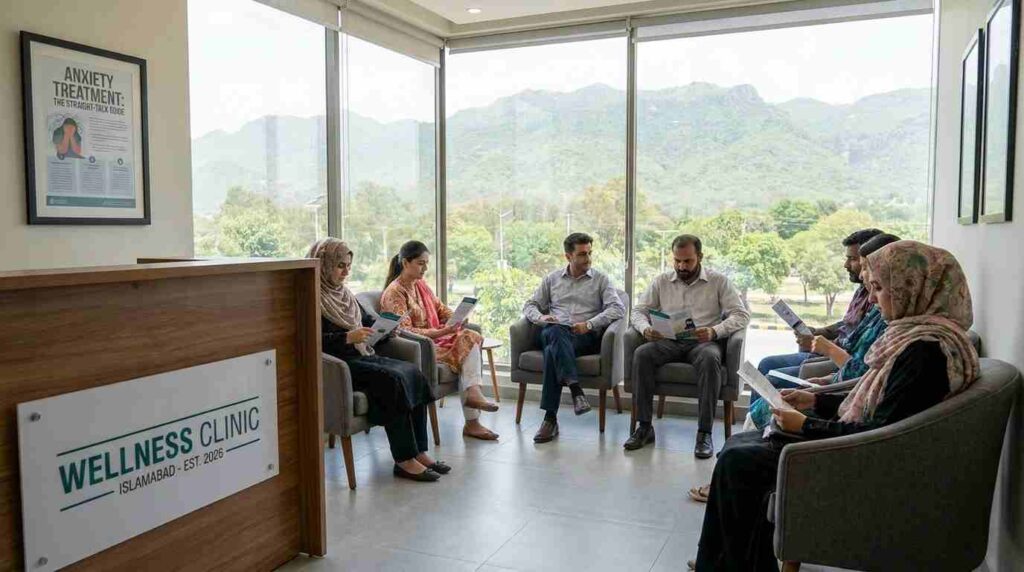
Anxiety Treatment in Islamabad: The Straight-Talk Guide for 2026 Here’s the deal. If you’re searching for anxiety treatment in Islamabad, you’ve already seen the fluffy promises. “Holistic healing.” “Luxury rehab.” None of that matters if the program doesn’t match your actual condition. The real question is simple: What treatment will actually work for my anxiety, right now, without bankrupting me? I’ve analyzed the clinics, the costs, and the outcomes. This page gives you the no-BS framework to decide—whether you need a therapist in F-7 or a residential program in Bani Gala. The best anxiety treatment in Islamabad depends on severity. Mild cases need CBT therapy (Rs. 3,000–8,000/session). Severe or dual-diagnosis cases often require a residential rehabilitation center like Umeed e Shifa (Rs. 70,000–150,000/month). Always verify PMDC registration and ask for a written aftercare plan before committing. What Type of Anxiety Treatment Do You Actually Need? Anxiety isn’t a one-size-fits-all problem. The treatment you pick should match the damage it’s causing to your daily life. Here’s the breakdown most Islamabad clinics won’t show you upfront. Your Situation The Right Level of Care Why You’re working but constantly worried Outpatient therapy (CBT) Builds coping skills, keeps your routine Physical symptoms rule your day (panic attacks, nausea) Psychiatric medication + therapy Meds calm the nervous system; therapy fixes the root You can’t leave home or function at all Intensive outpatient or residential Structured environment halts the downward spiral Therapy failed, or substance use is involved Rehabilitation center Addresses both issues safely under one roof Pro tip: Don’t start with the most expensive option. Start with a diagnosis. A single 90-minute psychiatric evaluation (Rs. 5,000–10,000) will save you years of wrong turns. Therapy in Islamabad: What Works, What’s Fluff Let me be blunt. Not all therapy is created equal. Cognitive Behavioral Therapy is the gold standard. It’s data-backed, practical, and time-limited. In Islamabad, skilled CBT practitioners charge Rs. 3,000–8,000 per session. You should see a 50% reduction in symptoms within 12–16 sessions. If you don’t, the therapist or the method isn’t working. What about Islamic counseling? For many in Islamabad, integrating faith-based coping makes the difference between dropping out and finishing treatment. The best therapists here blend CBT with Islamic principles naturally—you don’t have to explain your context. This is a local advantage you won’t find in generic Western guides. The medication question. SSRIs like escitalopram are first-line. They’re not addictive. They take 4–6 weeks. If a clinic hands you benzodiazepines (Xanax, Rivotril) for daily use and doesn’t give you a taper plan, run. The DRAP 2025 advisory explicitly warned against long-term benzo scripts. That’s a red flag you can verify today. When Should You Check into a Rehabilitation Center? A rehabilitation center in Islamabad is not a spa. It’s a medical facility. Use it when outpatient care fails. You’re a candidate for residential treatment if you check two or more of these boxes: Bani Gala has become a hub for these centers because of its quiet, trigger-free environment. But the location doesn’t matter if the clinical team is weak. Focus on the staff, not the scenery. Umeed e Shifa Rehab Center: The On-the-Ground Reality I’m going to give you the honest pros and cons, because no one else does. Umeed e Shifa Rehab Center offers 30- to 90-day programs in Bani Gala. Their model combines daily psychiatric checks, individual therapy, and family counseling. Pros: Cons: Before you pay a rupee, visit. Ask to see the PMDC registration of the psychiatrist. Watch how staff speak to patients. Any hesitation? Leave. The Real Cost of Anxiety Treatment in Islamabad (2026 Data) Price opacity is a scam. Here are the hard numbers collected from clinics and centers in early 2026. All figures should be confirmed directly, but this sets your baseline. Service Cost Range (PKR) Insider Note Psychiatrist consult (private, 45 min) 4,000–10,000 Government OPDs: as low as Rs. 200 CBT therapy session (50 min) 3,000–8,000 Online sessions cut this by 20–30% Monthly generic SSRIs 1,500–5,000 Branded versions triple the price Intensive outpatient program (month) 40,000–80,000 3–4 days a week, group + individual Residential rehab (month) 70,000–200,000 Umeed e Shifa sits near Rs. 80k–150k The hidden cost nobody talks about? Post-treatment therapy. You’ll need at least 6 months of follow-up sessions after discharge. Add Rs. 50,000–100,000 to your budget. 3 Costly Mistakes Islamabad Residents Make How to Make a Decision Today (5-Step Checklist) If you’re still stuck, many reputable centers offer a free 15-minute phone assessment. Call and ask directly: “What level of care does my case likely need?” A straight answer signals honesty. A sales pitch signals danger. CONCLUSION The truth about anxiety treatment in Islamabad is not that it’s scarce—it’s that quality is uneven. You now know the cost ranges, the right questions, and the difference between a solid rehab like Umeed e Shifa and a facility that’s just a pretty location. There is no magic cure. There’s only the right match between your severity and the treatment level. That match is what this guide helps you find. Make the call. Ask the hard questions. And do not settle for a program that won’t prepare you for the life waiting after discharge. FAQ SECTION 1. What’s the fastest anxiety treatment in Islamabad?There is no instant fix. Fastest reduction often comes from a combination of medication (4–6 weeks) and intensive CBT. But rapid relief without skill-building leads to relapse. 2. How do I verify a psychiatrist’s license?Ask for the PMDC registration number and check it on the Pakistan Medical and Dental Council’s online portal. Do this before your first appointment. 3. Does Umeed e Shifa treat anxiety without substance abuse?Yes. They accept primary anxiety cases, but their program is built for severe, treatment-resistant conditions. If you have mild anxiety, outpatient therapy is a better, cheaper first step. 4. Are online therapy sessions effective for anxiety?For mild to moderate anxiety, yes. Data from local platforms shows 70-80% of clients report improvement. It’s a viable, cheaper alternative. 5. What if I can’t afford private anxiety treatment?Use government hospital OPDs at PIMS or Polyclinic. Consultations

Scroll to Top