
Your heart is pounding so hard you can count the beats. Your hands are numb. You genuinely believe something catastrophic is happening to your body. That moment that terrifying few minutes is a severe panic attack. And if you’re in Islamabad or nearby, Bani Gala, and it keeps happening, this article is for you.
This piece covers severe panic attacks specifically the kind that send people to emergency rooms, that happen multiple times a week, and that don’t respond to breathing exercises alone. It does not cover mild or occasional anxiety. For that, our anxiety and panic disorder page goes deeper.
What Actually Happens in a Severe Panic Attack?
A severe panic attack is not weakness. It’s not drama. It’s your nervous system misfiring at maximum volume triggering a full fight-or-flight response when there is no threat in front of you.
Physically, adrenaline floods your system within seconds. Your heart rate spikes. Breathing becomes shallow. Blood rushes to your limbs. Your digestive system shuts down. Some people experience chest pain intense enough to be confused with a cardiac event. Others feel their throat closing, their vision narrowing, or an overwhelming conviction that they are about to die.
According to the WHO Pakistan mental health gap report, anxiety disorders including panic disorder affect a significant portion of Pakistani adults, yet fewer than 15% ever receive any form of clinical treatment. That gap isn’t because panic disorder isn’t serious. It’s because most people don’t know it’s treatable, or they’re too ashamed to say it out loud.
So they suffer alone. Often for years.
Is a Severe Panic Attack Dangerous?
No and yes. That needs unpacking.
A panic attack itself will not kill you. Your heart won’t stop. You won’t lose your mind. The episode, however terrifying, will pass usually within 10 to 30 minutes. But here’s what makes severe, recurring panic attacks genuinely dangerous: what they do to your life between episodes.
People start avoiding the places where attacks happened. Then the situations. Then the activities. And then other people. This process called agoraphobic avoidance can shrink a person’s entire world within months. We’ve seen patients at our clinic in Bani Gala who hadn’t left their homes for weeks because the fear of the next attack had become more disabling than the attacks themselves.
That’s when panic disorder stops being a discomfort and starts being a crisis.
Why Do Severe Panic Attacks Keep Coming Back?
This is the question families from Rawalpindi, DHA Islamabad, and Bahria Town ask us most often. Their family member had one panic attack, went to a hospital, was told their heart was fine and then had another. And another.
The reason is neurological, not psychological weakness. Repeated panic attacks sensitise the brain’s threat-detection system specifically the amygdala making it progressively more likely to trigger a false alarm. Without treatment, the brain learns to panic. And it gets better at it.
Dr. Anwar Ul Haq, our Consultant Psychiatrist at Umeed-e-Shifa, holds the MRCPsych a postgraduate psychiatric qualification awarded in the UK and one of the most rigorous psychiatric credentials in the world. He’s registered with the Pakistan Medical and Dental Council (PMDC). In his clinical assessment, recurring panic attacks almost always involve one of three underlying mechanisms: an untreated anxiety disorder, a co-occurring depressive episode, or in some cases a physical condition like thyroid dysfunction that is amplifying the nervous system’s reactivity. Proper assessment separates these. Guesswork doesn’t.
What Families Need to Know — Speaking Directly to You
If you’re reading this as a parent, spouse, or sibling, you’re probably exhausted. You’ve watched someone you love have an episode that looked like a heart attack, you’ve taken them to hospitals, you’ve heard “everything is normal” and then it happened again.
It’s frightening to watch. And it’s equally frightening not to know how to help.
Here’s what we know from working with families: the instinct to reassure during a panic attack “you’re fine, calm down, breathe” is understandable but often makes it worse. The person in a panic attack cannot hear logic in that moment. What they need is calm presence, not correction.
But more importantly what they need is treatment. Not management. Not coping tips. A proper clinical assessment that identifies what’s driving the attacks and builds a plan to stop them.
All consultations at Umeed-e-Shifa Rehabilitation Center are handled with complete confidentiality. Nothing is shared with family members without the patient’s explicit consent, and nothing leaves the clinic. Families from across Islamabad choose us partly for this reason. And confidentiality matters — especially in Pakistani communities where mental health stigma still stops people from reaching out in the first place.
How Is Severe Panic Attack Treatment Different From Regular Anxiety Treatment?
Not every anxiety treatment works for severe panic disorder. This distinction matters, and it’s one that gets blurred in a lot of online advice.
For mild anxiety, self-help strategies breathing techniques, mindfulness, regular exercise — can be genuinely effective. But severe, recurring panic attacks have typically progressed past the point where breathing exercises alone do anything. The nervous system is already in a chronic state of dysregulation, and you need clinical intervention to reset it.
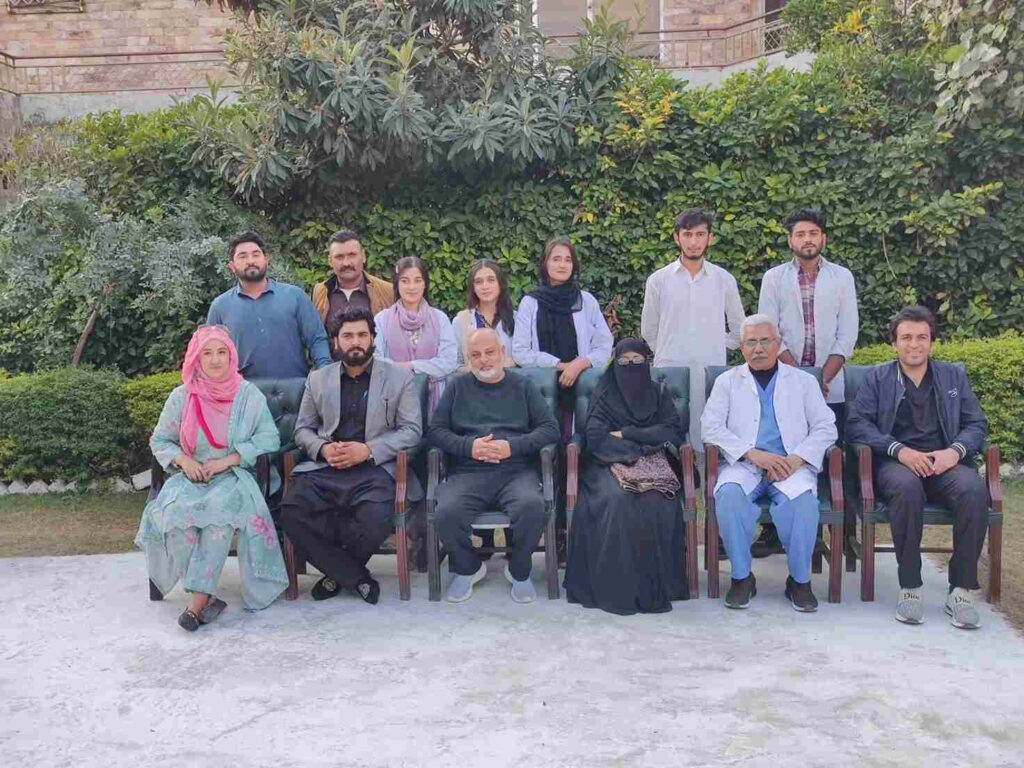
Treatment for severe panic disorder at a psychiatric level typically involves two parallel tracks. First: medication management. Specific medications not sedatives, not habit-forming tranquillisers can reduce the frequency and intensity of attacks significantly within 4 to 6 weeks. Dr. Muhammad Ilyas, our MBBS, MCPS Neuropsychiatric specialist, works alongside Dr. Anwar in assessing which approach is appropriate for each patient. Not every person needs medication. But for severe cases, it’s often the difference between function and complete withdrawal from daily life.
Second: structured psychotherapy. Cognitive Behavioural Therapy (CBT) is the most evidence-supported psychological treatment for panic disorder. Dr. Fatima Fayyaz, our Consultant Psychologist, and Dr. Sadia Sikandar, our Senior Clinical Psychologist, deliver CBT specifically adapted for panic — targeting the thought patterns that amplify each episode and the avoidance behaviours that maintain the cycle.
The combined approach psychiatric assessment plus psychological therapy consistently produces better outcomes than either alone. That’s not a marketing claim. That’s what the clinical literature on panic disorder says, and it’s what we observe in our patients.
What Happens When You Come to Us in Bani Gala?
A woman calls from F-8 Markaz at 9pm. She’s had her third panic attack this week. Her husband found her on the floor of their kitchen convinced she was having a stroke. She’s scared to sleep. She’s scared to be alone.
She calls 0310-4000444. Our team takes the call. Within the first ten minutes, we’re not just taking her details, we’re beginning to understand her. When did this start? What was happening in her life before the first attack? Has she had any physical investigations? Is she sleeping?
The assessment, when she comes in, is thorough. It covers her psychiatric history, her physical health, her family context, and her daily functioning. Dr. Anwar’s assessment determines whether medication is indicated, what type, and at what dose. Dr. Fatima’s psychological input identifies the specific cognitive patterns maintaining the attacks.
Our address is House No 1, Durrani Street, Main Jinnah Road, Bani Gala, Islamabad. Families driving from Rawalpindi typically take Murree Road toward Bani Gala, you’ll pass the Rawal Dam before the final turn. No referral needed. No waiting list for the initial consultation.
We are compliant with the Islamabad Healthcare Regulatory Authority (IHRA) and registered with the SECP. Our medical team is on-site 24 hours a day.
FAQ — Questions Pakistani Families Actually Ask
Can panic attacks be completely cured in Pakistan?
Yes, panic disorder is one of the most treatable psychiatric conditions. With the right combination of medication management and CBT, the majority of patients experience a significant reduction in attack frequency within 6 to 8 weeks, and many become entirely attack-free. Treatment needs to be clinical, not just self-help. At Umeed-e-Shifa in Bani Gala, we assess each patient individually to determine what’s driving the attacks before beginning any treatment plan.
Is there a psychiatrist for panic attacks available at night in Islamabad?
Umeed-e-Shifa’s medical team is available 24 hours a day, every day. Panic disorder doesn’t follow office hours and neither do we. You can call 0310-4000444 at any time, including at night, for a first consultation or for guidance during a crisis.
Panic attack aur dil ka dora mein kya farq hai?
(What is the difference between a panic attack and a heart attack?)
Both feel very similar chest pain, rapid heartbeat, shortness of breath, feeling of doom. The key difference is that a panic attack’s symptoms peak within 10 minutes and then fade, while a cardiac event tends to persist or worsen. If you’re unsure, always go to an emergency room first. Once cardiac causes are ruled out and the attacks keep recurring, that’s when psychiatric assessment like the one available at Umeed-e-Shifa becomes the right next step.
Do I need a referral to see a psychiatrist for panic attacks in Islamabad?
No referral is needed at Umeed-e-Shifa. You can call directly on 0310-4000444 and arrange a first consultation, including a free initial call with our team. This is something most hospital-based psychiatric services in Islamabad cannot offer direct access without a GP letter or waiting period.
Panic attacks ki wajah kya hoti hai?
(What causes panic attacks?)
Panic attacks are caused by the brain’s alarm system the amygdala triggering a full threat response in the absence of real danger. This can be set off by chronic stress, a traumatic event, major life change, or in some cases, an underlying medical condition like thyroid dysfunction. According to Pakistan Journal of Medical Sciences data, anxiety disorders are significantly under-diagnosed in Pakistani adults. A proper psychiatric assessment identifies the specific cause which is why guessing at treatment without assessment rarely works.
Panic attack treatment Rawalpindi ke qareeb kahan milegi?
(Where can I get panic attack treatment near Rawalpindi?)
Umeed-e-Shifa Rehabilitation Center in Bani Gala, Islamabad is approximately 25 to 35 minutes from Rawalpindi’s Saddar area via Murree Road. We serve patients from across Rawalpindi, DHA Islamabad, Bahria Town, and the wider twin-city region. Call 0310-4000444 for directions and to arrange a same-day or next-day consultation.
You Don’t Have to Keep Living This Way
Severe panic attacks are not a character flaw, a sign of weakness, or something you simply have to endure. They’re a clinical condition. And clinical conditions respond to clinical treatment.
Severe panic attack treatment in Islamabad is available and it’s available right now. Whether you’re in F-8, coming from Rawalpindi, or sitting in Bani Gala itself, our team at Umeed-e-Shifa is reachable at 0310-4000444, any hour of the day or night. The first consultation is free. No referral. No waiting.
For related reading, our anxiety and panic disorder page covers the full spectrum of anxiety conditions, and our depression treatment page addresses the link between depression and panic disorder — a connection that’s more common than most people realise.