
Drug Addiction Treatment in Islamabad: Why Most Families End Up at the Wrong Center First
Your brother is using ICE. Your husband is hiding bottles. You’ve typed the same search three times and you’re still staring at a list of names that all say the same thing “professional staff,” “evidence-based,” “compassionate care.”
They all sound identical. They’re not.
Drug addiction treatment in Islamabad ranges from genuinely clinical facilities with qualified psychiatrists and structured recovery programs, to underfunded operations with a bed, a lock, and no real treatment happening. Families who don’t know the difference don’t find out until after admission — sometimes weeks later, after money is spent and trust is broken.
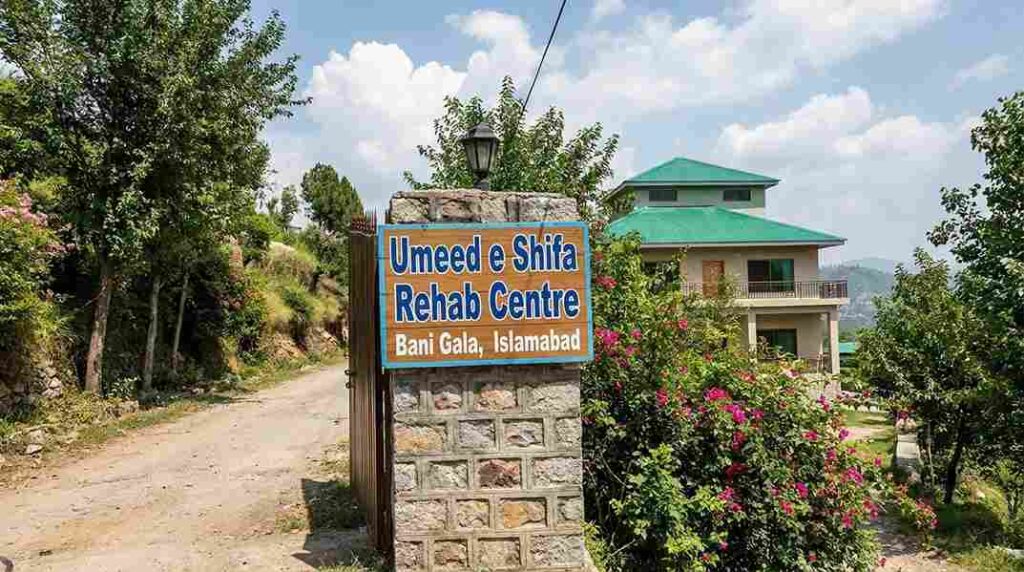
This guide tells you what real treatment looks like, what questions cut through the marketing, and why Umeed-e-Shifa Rehabilitation Center in Bani Gala has become the center families in Islamabad call first in 2026.
How Bad Is Drug Addiction in Islamabad Right Now?
Bad enough that you’re not overreacting by taking it seriously.
According to a 2025 study published in PLOS Global Public Health by Aga Khan University researchers, opioid, benzodiazepine, and methamphetamine positivity rates in Pakistani clinical samples rose consistently from 2008 through 2022. UNODC estimates over 6.7 million Pakistanis are currently involved in drug use. Pakistan’s geographic position — bordering Afghanistan, which produces the majority of the world’s heroin — means cheap, potent supply is never far away.
Islamabad is not a bubble. Crystal meth (ICE) has moved deep into middle-class and educated households over the last five years. Prescription drug dependency — especially benzodiazepines — is rising among professionals. Heroin use cuts across income levels. And in 2018, Pakistan’s Minister of State for Interior publicly stated that more than half of students in Islamabad’s educational institutions were being exposed to drug abuse.
The families who reach out to a center like Umeed-e-Shifa are not outliers. They are the majority — they’ve just finally stopped waiting.
What Drug Addiction Treatment Actually Involves
Treatment is not one thing. It’s three sequential phases, and skipping or rushing any of them is why people relapse.
Phase 1: Medical Detox
Detox is the clearing of substances from the body under clinical supervision. For heroin, ICE, alcohol, and benzodiazepines, withdrawal is medically dangerous — not uncomfortable, dangerous. Seizures, psychosis, cardiac stress, and severe dehydration are real withdrawal risks. Unsupervised detox at home with these substances is a health emergency waiting to happen.
At Umeed-e-Shifa, detox is medically supervised with 24/7 nursing and physician oversight. The center’s 30-day detox program is structured for patients with moderate dependencies, while the 90-day detox and assessment program covers complex cases — long-term heroin use, ICE addiction with psychological complications, or dual diagnosis situations requiring extended stabilization before therapy begins.
Detox duration: alcohol and benzodiazepines typically 5–10 days; heroin 7–14 days; ICE detox is primarily psychological but requires close monitoring for psychosis and sleep disorder in the first two weeks.
Phase 2: Rehabilitation — Where Recovery Actually Happens
Detox clears the body. Rehab changes behavior, thinking patterns, and the conditions that drove the addiction. Without this phase, relapse rates are extremely high.
Umeed-e-Shifa’s rehabilitation model is built around individualized treatment plans — not a single program applied to every patient. Each plan is developed after a complete medical and psychological assessment and includes:
- Cognitive Behavioural Therapy (CBT) — the gold-standard psychological intervention for substance use disorders, delivered by qualified clinical psychologists
- Individual counseling sessions — one-to-one therapy addressing the personal triggers, trauma, and thought patterns specific to each patient
- Group therapy — structured peer support facilitated by trained staff, not just informal conversation
- Family therapy and education — because addiction affects the whole household, and recovery without family involvement has a significantly lower success rate
- Relapse prevention planning — practical, personalized skills for life after discharge
The clinical team at Umeed-e-Shifa includes Dr. Anwar Ul Haq (Consultant Psychiatrist, MBBS, MRCPsych UK), Dr. Muhammad Ilyas (MBBS, MCPS Neuropsychiatric), Dr. Fatima Fayyaz (Consultant Psychologist), and Dr. Sadia Sikandar (Senior Clinical Psychologist). That is a credentialed multidisciplinary team — not peer counselors with no formal qualifications.
Phase 3: Aftercare and Relapse Prevention
The phase most centers in Pakistan skip or treat as an afterthought. Discharge without structured aftercare is one of the top drivers of relapse — not because treatment failed, but because the patient returned to the same environment with no plan.
Umeed-e-Shifa includes aftercare and relapse prevention as a formal part of treatment, not a handshake at the door. Outpatient support is available for patients transitioning out of residential care.
Why Bani Gala Is Clinically Important — Not Just Scenic
Both Umeed-e-Shifa and a handful of other serious centers in Islamabad are based in Bani Gala. Families sometimes ask why. The answer is clinical, not aesthetic.
Distance from urban triggers is a documented factor in early recovery. During the first 30 to 90 days — when cravings are strongest and impulse control is weakest — proximity to dealers, using friends, and familiar environments is a direct relapse risk. Bani Gala’s hillside location, clean air, and physical separation from central Islamabad removes those triggers by geography.
Patients at Umeed-e-Shifa wake up to mountains, not the street corners associated with their addiction. That separation is not incidental. It is built into the treatment environment by design.
Dual Diagnosis: The Condition Most Centers Can’t Actually Treat
Here is what almost no rehab website in Pakistan tells you directly: a significant number of people seeking drug addiction treatment have an untreated mental health condition running alongside the addiction. Depression, anxiety, PTSD, bipolar disorder, and schizophrenia don’t exist separately from addiction — they interact with it, deepen it, and make standard treatment ineffective when left unaddressed.
This is called dual diagnosis. It requires a facility that can simultaneously manage psychiatric medication, deliver structured therapy, and supervise detox — all under one roof.
Umeed-e-Shifa explicitly offers dual diagnosis support, treating conditions including depression, anxiety, PTSD, schizophrenia, bipolar disorder, and personality disorders alongside substance use disorders. With a Consultant Psychiatrist holding MRCPsych (UK) credentials and a Neuropsychiatrist on the clinical team, the center can manage psychiatric medication during treatment — something most centers in Islamabad simply cannot do safely.
If there is any suspicion of a co-occurring mental health condition, this is not optional. It is the single most important factor in choosing a center.
Umeed-e-Shifa vs. Other Rehab Centers in Islamabad
Families deserve an honest comparison, not just promotional content about one center.
| Factor | Umeed-e-Shifa | Typical Islamabad Centers |
|---|---|---|
| Location | Bani Gala, Islamabad | Varies — some urban, some peri-urban |
| Psychiatrist on team | Yes — MRCPsych (UK), MCPS Neuropsychiatric | Varies — many centers lack on-site psychiatry |
| Dual diagnosis treatment | Yes — explicit program | Often unavailable or referred out |
| Program lengths | 30-day detox, 90-day full program, individualized | Often fixed packages only |
| Inpatient + Outpatient | Both available | Many offer inpatient only |
| 24/7 medical support | Yes | Not universal |
| Family therapy | Structured, included in program | Often informal or absent |
| Women treated | Yes | Several centers are men-only |
| Regulatory compliance | IHRA guidelines, SECP registered | Varies significantly |
| Aftercare | Formal relapse prevention included | Often absent post-discharge |
Pricing varies by program and room type. Contact Umeed-e-Shifa directly at +92 310 4000444 or info@umeedeshifa.com for current rates. All pricing should be verified directly with the center.
Addiction Types Treated at Umeed-e-Shifa
The center covers the full range of substance use disorders presenting in Islamabad and Pakistan:
- Heroin and opioid addiction — medically supervised detox with medication-assisted treatment where appropriate
- ICE / crystal methamphetamine — specialized program addressing both physical withdrawal and psychological complications including psychosis
- Alcohol dependency — full medical detox, counseling, and long-term relapse prevention
- Cannabis addiction — behavioral therapy and structured counseling
- Benzodiazepine and prescription drug dependency — tapering protocols under medical supervision
- Cocaine and stimulant use — rehabilitation and behavioral support
- Tobacco and caffeine dependency — structured reduction programs
For mental health, the center treats depression, anxiety, PTSD, stress-related disorders, schizophrenia, bipolar disorder, personality disorders, and sexual disorders.
Questions to Ask Before Admitting Anyone to a Rehab Center
Use this checklist before calling any center — including Umeed-e-Shifa. A center that handles these questions confidently has nothing to hide.
- Do you have a board-certified psychiatrist on-site, not on-call?
- What qualifications do your psychologists hold?
- Is medical staff present 24 hours a day, seven days a week?
- How do you manage psychiatric emergencies?
- Do you treat dual diagnosis — addiction alongside mental health conditions?
- What does a typical day in your residential program look like?
- How is family involved during treatment?
- What is your aftercare plan when a patient is discharged?
- What is your confidentiality policy — who can access patient information?
- Are you compliant with IHRA regulations?
Umeed-e-Shifa answers all of these. Bani Gala, Islamabad. Available 24/7. Contact: +92 310 4000444.
What Families Get Wrong — Every Time
Three mistakes repeat across almost every family that reaches out too late.
Waiting. The average Pakistani family waits two to three years after recognizing the problem before seeking help. Addiction doesn’t plateau. It deepens. The person who is manageable today becomes medically critical at year three.
Choosing on price alone. The difference between a PKR 30,000/month facility and one that costs more isn’t always comfort — it’s often clinical capability. Qualified psychiatrists, structured therapy, and proper medical detox cost money. A failed treatment stay costs far more in the long run.
Thinking discharge is recovery. Leaving residential treatment is the beginning of the hardest phase, not the end of the process. Families that provide no structure, no follow-up, and no aftercare involvement after discharge are inadvertently recreating the exact conditions that enabled the addiction.
Conclusion
Drug addiction treatment in Islamabad works when the center has the clinical depth to match the complexity of the case. For most families in 2026, that means a facility with qualified psychiatrists, dual diagnosis capability, a proper residential program, and a formal aftercare plan.
Umeed-e-Shifa in Bani Gala, Islamabad, offers all of that — with a credentialed team that includes a UK-qualified consultant psychiatrist, senior clinical psychologists, and 24/7 medical support across a full range of addiction and mental health conditions.
Don’t let another month pass. The family member you’re worried about needs professional help now — not a better moment that never arrives.
Call Umeed-e-Shifa: +92 310 4000444 | umeedeshifa.com | House No 1, Durrani Street, Main Jinnah Road, Bani Gala, Islamabad
Every day earlier is a better outcome.
[6] FAQ SECTION
Q1: What makes Umeed-e-Shifa different from other rehab centers in Islamabad? Umeed-e-Shifa combines something rare in Islamabad: a UK-qualified consultant psychiatrist, multiple clinical psychologists, 24/7 medical staffing, and formal dual diagnosis treatment — all in one facility. Most centers offer one or two of these. Umeed-e-Shifa offers all of them under one roof in the therapeutic environment of Bani Gala, with both inpatient and outpatient options and IHRA regulatory compliance.
Q2: How much does treatment at Umeed-e-Shifa cost? Costs vary depending on program length, room type, and individual treatment requirements. Umeed-e-Shifa offers a 30-day detox program and a 90-day comprehensive program, among other individualized plans. Contact the center directly at +92 310 4000444 or info@umeedeshifa.com for current rates. Pricing changes over time and should always be confirmed directly with the facility.
Q3: Does Umeed-e-Shifa treat women? Yes. Umeed-e-Shifa treats both male and female patients. Given cultural sensitivities, families should confirm specific accommodation arrangements during the inquiry call. The center operates with strict confidentiality protocols — no patient information is shared without explicit consent.
Q4: What is the 90-day program at Umeed-e-Shifa? The 90-day detox and assessment program with effect management is designed for complex cases — long-term heroin or ICE dependency, dual diagnosis, or patients who have relapsed after shorter treatment stays. It combines medical detox, comprehensive psychological assessment, structured therapy, psychiatric management, and a full relapse prevention plan. It is significantly more thorough than a standard 28-day stay and appropriate for severe or long-standing addiction.
Q5: Can Umeed-e-Shifa treat schizophrenia alongside addiction? Yes. With Dr. Anwar Ul Haq (MRCPsych UK) and Dr. Muhammad Ilyas (MCPS Neuropsychiatric) on the clinical team, Umeed-e-Shifa can manage schizophrenia and other serious psychiatric conditions during treatment. This is critical — patients who use substances to manage psychotic symptoms cannot be treated with addiction therapy alone. Psychiatric stabilization and addiction treatment must happen simultaneously.