

Your Loved One Won’t Go: How to Admit Someone to Rehab in Pakistan Without Losing Them
Your loved one refuses help? How to admit someone to rehab in Pakistan legally, what the law allows, and why forced pickups backfire.

Your loved one refuses help? How to admit someone to rehab in Pakistan legally, what the law allows, and why forced pickups backfire.

Searching for the best rehab center in F-7 Islamabad? What to check, real 2026 costs, IHRA licensing, and why closest isn’t always best.

Detoxification is often the first step toward recovery from addiction. However, drug detox and alcohol detox are not the same. Both help people manage withdrawal symptoms, but they differ in their health risks, symptoms, and treatment approaches. Understanding these differences can help individuals and families make informed decisions about professional care. For people struggling with substance dependence, choosing the right treatment is important. A suitable detox plan can help manage withdrawal safely and prepare individuals for the next stage of recovery. What Is Drug Detox? Drug detox is the process of managing withdrawal symptoms when a person stops using drugs after developing physical dependence. The treatment depends on the substance, duration of use, level of dependence, and overall health. People who use opioids, methamphetamine, or certain prescription medications may experience withdrawal symptoms when they stop. Professional addiction treatment can help individuals understand their treatment options and receive care based on their specific needs. Common Drug Withdrawal Symptoms Drug withdrawal symptoms vary depending on the substance. Common symptoms include anxiety, irritability, sleep problems, fatigue, muscle pain, nausea, and strong cravings. Some substances can cause more serious complications. For example, suddenly stopping certain sedatives, including benzodiazepines, can lead to seizures or other life-threatening problems. Medical assessment is essential before stopping these substances. What Is Alcohol Detox? Alcohol detox involves managing withdrawal symptoms after a person with alcohol dependence reduces or stops drinking. Symptoms can begin within hours of the last drink, and their severity depends on several factors, including drinking history and overall health. Common symptoms include shaking hands, sweating, anxiety, nausea, headaches, and difficulty sleeping. Severe alcohol withdrawal can cause seizures or delirium tremens, a potentially fatal condition that requires emergency medical treatment. People experiencing alcohol dependence should seek medical advice before stopping suddenly. Learning about alcohol use and treatment options can help individuals understand why professional support matters when addressing problematic drinking. Drug Detox vs Alcohol Detox: Key Differences Although both detox programs focus on withdrawal management, they differ in several important ways. 1. Withdrawal Symptoms Drug withdrawal symptoms depend on the substance involved. Opioid withdrawal may cause muscle aches, stomach problems, diarrhea, and intense cravings. Stimulant withdrawal can involve exhaustion, low mood, and changes in sleeping patterns. Alcohol withdrawal may cause tremors, increased heart rate, seizures, and severe confusion. Because symptoms can become dangerous, medical professionals must assess each person’s condition before recommending a treatment plan. 2. Medical Risks Both drug detox and alcohol detox can involve serious health risks. Alcohol withdrawal is particularly concerning because severe complications can develop quickly. Certain drug withdrawals also require careful medical supervision. Withdrawal from sedatives can be life-threatening, while opioid withdrawal may cause dehydration and other complications. A professional assessment helps determine whether inpatient monitoring or another level of care is appropriate. 3. Treatment Approaches Drug detox may involve medical monitoring, supportive care, and medication when clinically appropriate. People with opioid use disorder may also benefit from evidence-based medications as part of their continuing treatment. Alcohol detox may require medication to manage withdrawal complications, along with hydration, nutritional support, and regular monitoring. At a rehabilitation facility, treatment should be tailored to the person’s condition rather than following the same approach for everyone. Reviewing the rehabilitation programs available at Umeed-e-Shifa can help families understand how structured care fits into the broader recovery process. 4. Duration of Detox The time required for detox depends on the substance, severity of dependence, withdrawal symptoms, and overall health. Some acute symptoms improve within days, while other symptoms may continue for weeks or longer. There is no single timeline suitable for everyone. Medical professionals can recommend an appropriate treatment duration based on an individual’s assessment and progress. Why Professional Detox Treatment Matters Attempting to detox without medical guidance can be dangerous, especially for people with alcohol dependence or dependence on certain prescription medications. Professional care provides an opportunity to identify health risks, monitor withdrawal symptoms, and develop an appropriate treatment plan. For individuals and families seeking support, a rehabilitation centre in Islamabad can be a starting point for exploring available addiction treatment options. Before choosing a facility, families should ask about medical supervision, staff qualifications, emergency procedures, and continuing care. Detox is only the beginning of recovery. Once withdrawal symptoms are managed, individuals may need counseling, behavioral therapy, family support, and relapse prevention planning to address the factors that contribute to substance use. What Happens After Detox? Completing detox is an important milestone, but it does not automatically resolve addiction. Continued treatment helps individuals understand their triggers, develop healthier coping skills, and build routines that support recovery. Depending on individual needs, aftercare may include psychological counseling, family therapy, medical follow-up, and relapse prevention strategies. People with co-occurring mental health conditions may also need appropriate psychiatric assessment and treatment. A personalized recovery plan can help individuals maintain progress after detox and identify support when challenges arise. Families can contribute by encouraging treatment, maintaining healthy boundaries, and creating a supportive environment without judgment. Frequently Asked Questions Is drug detox different from alcohol detox? Yes. Both manage withdrawal symptoms, but their risks and treatment methods vary. Alcohol withdrawal can cause life-threatening complications, while certain drug withdrawals also require specialized medical supervision. How long does detox take? Detox duration depends on the substance, severity of dependence, and overall health. A healthcare professional can assess the individual and recommend appropriate care. Can someone detox at home? Home detox can be unsafe for people at risk of severe withdrawal. Alcohol and sedative withdrawal can cause life-threatening complications, so medical advice should be obtained before stopping these substances. Is detox enough to overcome addiction? No. Detox manages withdrawal but does not address all the behavioral, psychological, and social factors associated with addiction. Continued treatment and recovery support are often necessary. Final Thoughts Drug detox and alcohol detox share the goal of helping people begin recovery, but each requires an approach suited to the substance involved and the person’s health needs. Understanding the differences can help families recognize the importance of professional assessment and appropriate

When someone decides to stop using drugs or alcohol, they may hear the words detox and withdrawal. Although these terms are closely related, they do not mean exactly the same thing. Understanding the difference between detox and withdrawal can help individuals and families make safer decisions about addiction treatment. Withdrawal refers to the physical and psychological symptoms that can occur when a person reduces or stops using a substance their body has become dependent on. Detoxification, often called detox, is the process of managing the effects of stopping substance use and helping the person become medically stable. Both are important parts of the recovery journey. However, detox alone does not address every aspect of addiction. Long-term recovery may also require psychological support, behavioral therapy, family involvement, and relapse prevention planning. What Is Detox? Detoxification is the initial process of helping the body adjust when a person stops or reduces the use of drugs or alcohol. Depending on the substance and the person’s health, this process may involve medical monitoring, supportive care, and medication prescribed by a qualified healthcare professional. Regular substance use can change how the brain and body function. When the substance is suddenly removed, the body may need time and support to adjust. A supervised detox program helps healthcare professionals assess symptoms, identify complications, and provide appropriate care. What Happens During a Detox Program? A detox program generally begins with an assessment. A healthcare professional may ask about the substance used, the amount and frequency of use, previous withdrawal experiences, current medications, and any physical or mental health concerns. Based on this assessment, the care team can recommend an appropriate level of support. Depending on the person’s needs, detox may take place in an inpatient facility or an outpatient setting. During supervised detox, care may include: The length and intensity of detox vary from person to person. There is no single timeline that applies to everyone. What Is Withdrawal? Withdrawal is the collection of symptoms that may develop when someone who has become physically dependent on a substance suddenly stops using it or significantly reduces their intake. These symptoms occur because the brain and body have adapted to the substance over time. Without it, the nervous system and other body functions must adjust. The process can cause discomfort and, in some cases, serious medical complications. Withdrawal symptoms depend on several factors, including the substance involved, how long it has been used, the amount taken, the person’s general health, and any history of previous withdrawal episodes. What Are the Common Symptoms of Withdrawal? Withdrawal can affect both physical and emotional well-being. Some people experience mild symptoms, while others need urgent medical attention. Common symptoms may include: Severe withdrawal may involve seizures, hallucinations, or serious confusion. These symptoms require emergency medical assessment. Not everyone experiences the same symptoms, and the absence of obvious symptoms does not necessarily mean withdrawal is safe to manage without professional advice. What Is the Difference Between Detox and Withdrawal? The simplest way to understand the difference is that withdrawal describes the symptoms, while detox refers to the process of managing substance cessation and its immediate effects. Detoxification and withdrawal often happen during the same period, which is why people frequently use the terms interchangeably. However, they serve different purposes when discussing addiction treatment. Detox Withdrawal A process of managing the effects of stopping substance use. Symptoms that can occur when substance use stops or decreases. May include medical assessment, monitoring, and treatment. May include physical and psychological reactions. Can involve professional support and medication when appropriate. Severity varies according to the substance and individual circumstances. Focuses on immediate safety and stabilization. Describes the body’s response to the absence of a substance. May lead into further addiction treatment. Symptoms may improve over time, although some can persist. For example, a person who stops drinking alcohol after prolonged heavy use may experience sweating, shaking, anxiety, or other withdrawal symptoms. A supervised detox process helps healthcare professionals monitor these symptoms and respond to medical risks. The important point is that detox is not simply waiting for a substance to leave the body. It can involve active medical care and support to help a person get through the early stage of recovery safely. How Long Do Detox and Withdrawal Take? There is no universal detox timeline. The duration depends on the substance, the person’s pattern of use, overall health, and whether other substances or medications are involved. Some withdrawal symptoms may begin within hours of the last use. Others may appear later. Symptoms can become more intense over the following days, but the timing and severity vary considerably. For example, alcohol withdrawal can become dangerous and may require urgent medical treatment. Opioid withdrawal can cause significant physical discomfort and dehydration, while withdrawal from some sedatives can cause life-threatening complications. Stimulants and other substances may produce prominent psychological symptoms, including fatigue, low mood, sleep changes, or cravings. Because withdrawal patterns differ, it is not safe to rely on a general online timeline to decide when someone can detox without medical support. What Factors Affect the Timeline? Several factors can influence the course of detox and withdrawal: Type of substance: Different drugs and alcohol affect the brain and body in different ways. Duration of use: Long-term or frequent use can influence dependence and withdrawal severity. Amount used: The dose and pattern of use may affect the risks involved. Overall health: Existing medical or mental health conditions can influence treatment needs. Previous withdrawal experiences: A history of severe withdrawal can increase concern about future episodes. Multiple substances: Using several substances, including prescription medicines, can make assessment and treatment more complex. A qualified healthcare professional can assess these factors and recommend a suitable treatment setting. Why Is Medical Supervision Important During Detox? Stopping substance use without professional guidance can be risky, particularly when someone is dependent on alcohol or sedative medications. Certain forms of withdrawal can lead to seizures, severe confusion, or other life-threatening complications. Medical supervision allows healthcare professionals to assess

Choosing between a 30-day and 90-day detox program can be difficult for someone struggling with drug or alcohol addiction. Many families think that a longer program is always better, while others believe a shorter stay is enough. The right choice depends on the person’s substance use, withdrawal history, physical and mental health, previous treatment, and recovery needs. It is also important to understand that a 30-day or 90-day program is not simply about spending a certain number of days in detox. Detox mainly focuses on managing withdrawal and helping a person reach a stable condition. Recovery may also require counseling, psychological support, rehabilitation, family involvement, and relapse prevention. What Is the Difference Between a 30-Day and 90-Day Detox Program? The main difference is the amount of time available for assessment, stabilization, treatment, rehabilitation, and recovery planning. A 30-day program provides a shorter period for detoxification, withdrawal management, assessment, psychological support, and early recovery work. It may be suitable for people who need structured care but can make progress within a shorter treatment period. A 90-day program provides more time for assessment, therapy, behavioral changes, rehabilitation, relapse prevention, and preparation for life after treatment. A longer program can be useful when someone needs additional time to work on substance use and related problems. Before deciding on a program, it is helpful to understand the medical detox process, including withdrawal monitoring, symptom management, stabilization, and treatment planning. Is a 30-Day Detox Program Enough? A 30-day program can be a useful starting point for many people, but it is not automatically the right duration for everyone. During a 30-day program, treatment may focus on: The important point is that 30 days should not be viewed as a guaranteed cure for addiction. Substance use disorders can require continued treatment and recovery support after the initial program. For people who need structured care within a shorter treatment period, a 30-day detox program can provide time to stabilize, understand treatment needs, and begin working on the causes and effects of addiction. When Can a 90-Day Detox and Assessment Program Be More Suitable? A 90-day program may be considered when a person needs more time to address addiction, mental health concerns, behavioral patterns, or relapse risks. A longer program can provide additional time for: A longer stay may be useful when addiction has affected several areas of a person’s life. For example, someone may need more time to work on repeated relapse, family problems, emotional difficulties, or unhealthy daily routines. However, choosing 90 days should not be based only on the idea that longer automatically means better. Treatment should match the person’s actual needs and progress. At Umeed-e-Shifa, a 90-day detox and assessment program provides additional time for assessment, psychological support, rehabilitation, and recovery planning when a longer structured program is appropriate. What Does a 30-Day Program Usually Focus On? The focus of a 30-day program is often stabilization and the beginning of recovery. The early stage may involve understanding the person’s substance use history, monitoring withdrawal symptoms, supporting physical and emotional stability, and identifying immediate treatment needs. Once the person becomes more stable, treatment can move toward counseling, psychological support, behavior change, and recovery planning. This approach is important because detox alone does not address every reason a person developed an addiction. Continued treatment may be needed to work on cravings, emotional triggers, relationships, habits, and relapse risks. What Does a 90-Day Program Add? The biggest difference with a longer program is the additional time available for treatment and assessment. A 90-day program can allow a person to move beyond the initial detox and spend more time developing recovery skills. This can include regular therapy, structured routines, psychological assessment, family involvement, relapse prevention, and preparation for continuing care. It also gives the treatment team more time to observe how the person responds to treatment. Some problems may not become clear during the first few days of detox. This does not mean every person needs 90 days. It means that people with more complex or long-standing needs may benefit from having additional treatment time. 30-Day vs 90-Day Detox Program: What Is the Difference? Factor 30-Day Program 90-Day Program Detoxification Included when clinically appropriate Included when clinically appropriate Stabilization Main early focus More time for stabilization Assessment Initial and ongoing assessment More extended assessment Therapy Early counseling and psychological support More time for continued therapy Relapse Prevention Introduced during treatment More time to develop and practice strategies Family Support May be included More opportunity for ongoing involvement Recovery Planning Developed during the program More time to prepare for continued recovery Best For People who may benefit from shorter structured care People who need extended treatment and assessment The table shows why the choice should not be based only on the number of days. The actual treatment needs of the person matter more. What Factors Should You Consider Before Choosing a Program? Several factors should be considered before choosing between 30 and 90 days. Substance Used Different substances can produce different withdrawal and recovery challenges. Alcohol, opioids, stimulants, cannabis, and prescription medicines may require different treatment approaches. History of Relapse Someone who has completed shorter treatments but repeatedly returned to substance use may need a more extended treatment plan. Mental Health Depression, anxiety, trauma-related symptoms, or other psychological difficulties can affect recovery. When substance use and mental health problems occur together, both should be considered in treatment planning. Physical Health A person’s medical condition can influence the level of care required during withdrawal and recovery. Home Environment A supportive home can help recovery, while an unstable environment may make it harder to maintain progress after leaving treatment. Treatment Progress The appropriate length of care can change as treatment progresses. A person’s response to therapy, stability, cravings, behavior, and relapse risk should all be considered. Is Detox the Same as Rehabilitation? No. Detox and rehabilitation are related but different stages of care. Detox focuses mainly on withdrawal, physical stabilization, and immediate safety. Rehabilitation focuses more on the psychological, behavioral,
Drug and alcohol detox can take anywhere from several days to several weeks, depending on the substance used, how long it has been used, the amount taken, previous withdrawal experiences, and the person’s physical and mental health. There is no single detox timeline that is right for everyone. For some people, the most intense withdrawal symptoms may settle within a few days. For others, especially those using alcohol, opioids, benzodiazepines, or multiple substances, withdrawal may last longer and may need close medical monitoring. It is also important to understand that detox is only the beginning of addiction treatment. Clearing a substance from the body does not automatically address cravings, habits, emotional problems, or the reasons behind substance use. A proper treatment plan may continue with therapy, rehabilitation, family support, and relapse prevention. How Long Does Drug and Alcohol Detox Usually Take? Most acute detox periods last several days, but the exact length depends on the individual case. Alcohol withdrawal may begin within hours after the last drink and can become more intense during the first few days. Opioid withdrawal often starts within the first day, while stimulant withdrawal may begin relatively soon after the last use and can involve tiredness, low mood, sleep changes, and strong cravings. Some medicines and substances can produce a longer withdrawal period. For this reason, a treatment team should not choose a detox length based only on a fixed number of days. The goal is not simply to keep a person in detox for a certain number of days. The goal is to manage withdrawal safely, monitor changes, help the person become stable, and decide what treatment should come next. What Factors Affect How Long Detox Takes? Several factors can change the length and intensity of detox. The substance: Different drugs affect the body in different ways. Alcohol, opioids, stimulants, cannabis, and prescription medicines can all produce different withdrawal patterns. Amount and frequency of use: Someone who uses a substance heavily or several times a day may have a different withdrawal experience from someone who uses it less often. Length of use: Long-term substance use can lead to physical dependence, which may affect withdrawal. Previous withdrawal: A person who has gone through withdrawal before may have a different experience during a later attempt. Physical health: Medical conditions, dehydration, sleep problems, nutrition, and other health concerns can affect treatment. Mental health: Anxiety, depression, trauma, bipolar disorder, or other mental health concerns can make the treatment process more complicated. Multiple substances: Using alcohol and drugs together can make withdrawal harder to predict and may require more careful assessment. This is why a proper medical assessment should come before deciding how long detox should take. How Long Does Alcohol Detox Take? Alcohol detox can begin within hours after the last drink. Common early symptoms can include shaking, sweating, anxiety, nausea, restlessness, and difficulty sleeping. Symptoms can become more severe during the first few days. In some people, alcohol withdrawal can include seizures, hallucinations, severe confusion, or delirium. These complications require urgent medical attention. Because severe alcohol withdrawal can be dangerous, people with significant alcohol dependence should not assume that stopping suddenly at home is safe. A medical detox program can monitor symptoms, assess the person’s condition, provide appropriate medical support, and watch for complications. The exact length of alcohol detox varies. Some people may stabilize within several days, while others require longer monitoring depending on their symptoms and health. How Long Does Drug Detox Take? Drug detox does not have one standard timeline because different substances produce different withdrawal patterns. Opioid Detox Opioids such as heroin and other short-acting opioids can cause withdrawal symptoms within hours after the last use. Symptoms may include muscle aches, sweating, restlessness, nausea, diarrhea, anxiety, and strong cravings. Short-acting opioid withdrawal often becomes more intense during the first few days and then gradually improves. Long-acting opioids can produce a slower and longer withdrawal pattern. The discomfort can be significant even when the withdrawal is not usually life-threatening. Medical support can help with symptom management and reduce the risk of dehydration and other problems. Stimulant Detox Stimulants such as methamphetamine and cocaine can produce a different withdrawal pattern. A person may experience extreme tiredness, increased sleep, low mood, irritability, anxiety, difficulty concentrating, and strong cravings. Some people can also experience serious psychological symptoms. The initial physical phase may be relatively short, but sleep, mood, energy, and cravings can continue to affect the person after the first few days. For this reason, completing the first stage of detox does not necessarily mean the person has completed treatment. Cannabis Detox Cannabis withdrawal may involve irritability, anxiety, sleep problems, reduced appetite, restlessness, and cravings. Symptoms are generally less medically dangerous than severe alcohol or benzodiazepine withdrawal, but they can still interfere with daily life and recovery. A person’s history of use and mental health can affect how difficult this period becomes. Prescription Medication Detox Some prescription medicines can cause withdrawal when stopped suddenly after regular or long-term use. This is particularly important with certain sedatives and other medicines that can produce serious withdrawal symptoms. Stopping such medicines without professional guidance may be unsafe. A doctor should decide whether the medicine needs to be reduced gradually and how the process should be monitored. What Does a Medical Detox Program Include? A medical detox program normally begins with an assessment rather than immediately stopping the substance. The treatment team may review substance use history, previous withdrawal, physical health, mental health, current medicines, and other factors that could affect treatment. The process may include: For a detailed explanation of these stages, read our medical detox step-by-step guide. Is a 30-Day Detox Program the Same as a Short Detox? No. A short period of acute withdrawal management and a 30-day treatment program are not necessarily the same thing. Acute detox may last only several days for some people. A 30-day detox program can provide additional time for stabilization, psychological support, counseling, assessment, and the early stages of rehabilitation. Umeed-e-Shifa lists
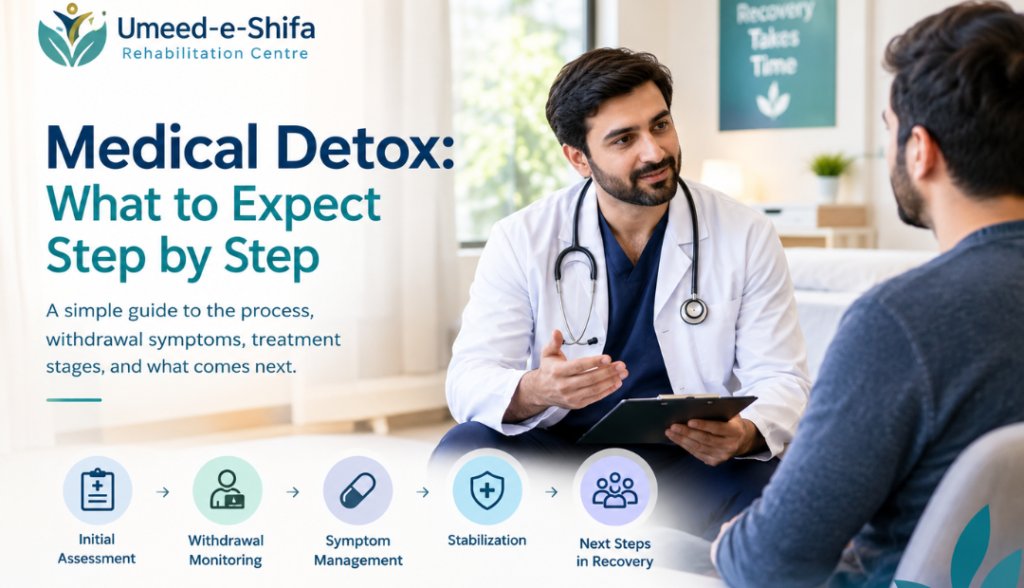
If you are wondering what to expect during medical detox, the process usually begins with a health assessment, followed by withdrawal monitoring, symptom management, stabilization, and planning for continued treatment. Medical detox is designed to help a person stop using drugs or alcohol as safely as possible while trained professionals monitor their physical and psychological condition. For families in Pakistan, choosing the right detox setting can feel confusing. The same is true for families in the UAE and Saudi Arabia who may consider treatment options in Islamabad because of family support, privacy, or access to structured rehabilitation. Understanding what happens during detox can make the decision easier. What Happens Before Medical Detox Begins? Before medical detox begins, the treatment team normally assesses the person’s substance use, health history, current symptoms, and possible withdrawal risks. This first assessment is important because detox is not the same for everyone. The substance involved, amount used, duration of use, previous withdrawal experiences, medications, and physical or mental health can all affect the treatment approach. A professional assessment may include: The goal is to understand what level of care the person may need before withdrawal becomes difficult. For families searching for treatment in Islamabad, this assessment can also help determine whether a shorter detox program or a longer rehabilitation plan is more appropriate. What Happens During Medical Detox? During medical detox, healthcare professionals monitor withdrawal symptoms and provide appropriate support to help the person become physically and mentally stable. Withdrawal can affect people differently. Some symptoms may be uncomfortable but manageable, while others can become serious depending on the substance and the person’s health. Medical detox may involve: Stage What Happens Main Purpose Assessment Health and substance-use history is reviewed Identify risks Withdrawal monitoring Symptoms and health changes are observed Maintain safety Symptom management Appropriate care is provided for symptoms Improve comfort Stabilization Physical and mental condition is monitored Reach a stable condition Treatment planning Next recovery steps are discussed Support long-term recovery The important point is that medical detox is not simply about removing drugs or alcohol from the body. It is a controlled process that helps manage the early stage of withdrawal and prepares the person for further treatment. The World Health Organization describes withdrawal management as a process that may require supportive care and, for some substances, closer medical supervision. What Withdrawal Symptoms Can You Expect During Medical Detox? Withdrawal symptoms depend on the substance used, the pattern of use, the person’s health, and previous withdrawal experiences. Common symptoms can include: Some types of withdrawal require greater medical attention. Alcohol and certain sedative withdrawals can become serious, while opioid withdrawal can involve significant physical symptoms and a high risk of returning to use without continued treatment. This is why stopping suddenly without professional advice may not be appropriate for everyone. If a person has heavy or long-term substance use, previous severe withdrawal, significant medical problems, or co-occurring mental health concerns, professional assessment is particularly important. How Is Medical Detox Different for Different Substances? Medical detox differs according to the substance because each substance can produce different withdrawal symptoms and risks. For example, opioid withdrawal may involve body aches, sweating, nausea, diarrhea, anxiety, and strong cravings. Alcohol withdrawal can involve shaking, sweating, anxiety, nausea, and in severe cases serious complications. Stimulant withdrawal may involve tiredness, sleep changes, low mood, irritability, and strong psychological cravings. There is no single detox method that works for every substance. The treatment team needs to know what the person has been using and how often they have been using it. This information helps professionals determine what type of monitoring and support may be appropriate. For people dealing with multiple substances, the assessment becomes even more important because withdrawal risks may overlap. How Long Does Medical Detox Take? Medical detox does not have one fixed duration because the timeline depends on the substance, severity of dependence, health condition, and withdrawal response. Some people may need a shorter period of withdrawal management, while others require more structured care before they are stable enough to continue with rehabilitation. It is also important to understand that detox duration and total treatment duration are not always the same. A person may complete the initial detox stage and still need weeks or months of therapy, rehabilitation, family support, and relapse prevention. 30-Day and 90-Day Treatment Options Umeed-e-Shifa offers structured programs that include a 30-day detox program and a 90-day detox and assessment program. The shorter program focuses on medical stabilization and early recovery support, while the longer program provides more time for assessment, psychological work, rehabilitation, and recovery planning. You can internally link the phrase 30-day detox program to Umeed-e-Shifa’s program page and use 90-day detox and assessment program as a second relevant internal link. The right program should be selected according to the individual’s clinical needs rather than choosing a duration simply because it sounds easier or shorter. What Happens After Medical Detox? After medical detox, the next step is usually continued addiction treatment because detox alone does not address all the psychological and behavioral factors connected with substance use. Further treatment may include: This is one of the most important points families should understand. Detox can help manage the withdrawal stage, but it does not automatically resolve addiction. The National Institute on Drug Abuse explains that detoxification is often an initial stage of treatment and that further treatment is needed to address the broader problems associated with addiction. How Can Families in Pakistan, UAE, and Saudi Arabia Prepare for Medical Detox? Families in Pakistan, the UAE, and Saudi Arabia should focus on clinical suitability, communication, privacy, and the complete treatment plan when considering medical detox. For families outside Pakistan who are considering treatment in Islamabad, planning before admission can make the process smoother. Consider these questions: For UAE and Saudi families considering a rehabilitation facility in Pakistan, practical issues such as travel, family communication, treatment duration, accommodation, and follow-up arrangements should also be discussed directly with the treatment provider before admission.
A detox program helps a person stop using drugs or alcohol while managing withdrawal in a safe setting. Medical detox may include health checks, withdrawal monitoring, medicines when needed, and support for physical or mental symptoms. Detox is often the first step in recovery, not the whole treatment. The right drug detox or drug and alcohol detox plan depends on the substance used, how long it was used, the amount used, and the person’s health. Some people need close medical care during withdrawal. Others may need a different level of support. What Is a Detox Program? A detox program helps a person stop using a substance while managing withdrawal and reaching a stable condition. When someone uses drugs or alcohol for a long time, the body may become used to them. Stopping suddenly can cause withdrawal symptoms. These symptoms can range from mild to serious. A detox program may provide: The National Institute on Drug Abuse explains that detox is often the first step in treatment, but detox alone does not treat all parts of addiction. What Is Medical Detox? Medical detox is a detox program where trained healthcare staff monitor a person’s health during withdrawal. Medical detox can be important when withdrawal may become severe or when a person has other health needs. Care may include: Medical detox does not mean that every person needs the same treatment. The level of care should be based on an individual assessment. Alcohol withdrawal is one example where medical care may be important. Severe alcohol withdrawal can include seizures and other serious symptoms. What Is Drug Detox? Drug detox is the process of helping a person stop using a drug while providing care for withdrawal symptoms. Different drugs can cause different withdrawal effects. For example, opioid withdrawal can cause body aches, sweating, nausea, diarrhea, and strong cravings. Other substances can cause different physical or mental symptoms. Drug detox may be needed for people using: The type of detox depends on the substance and the person’s needs. There is no single detox treatment that is right for everyone. What Is Drug and Alcohol Detox? Drug and alcohol detox provides withdrawal support for people who use alcohol, drugs, or more than one substance. Using more than one substance can make assessment more important. The treatment team needs to know what was used, how often it was used, and when it was last used. This information can help the team understand withdrawal risks and decide what level of care may be needed. Alcohol withdrawal may cause symptoms such as sweating, shaking, nausea, anxiety, and increased heart rate. Severe withdrawal can be dangerous. What Is the Detox Process? The detox process usually starts with an assessment, followed by withdrawal care, stabilization, and planning for continued treatment. 1. Assessment The first step is to understand the person’s health and substance use. The team may ask about: 2. Withdrawal Monitoring Withdrawal can begin after a person reduces or stops substance use. Healthcare staff can monitor symptoms and look for changes that may need treatment. 3. Symptom Management Some symptoms may need medical treatment. Depending on the substance and symptoms, treatment may help with problems such as anxiety, nausea, sleep problems, pain, shaking, or cravings. 4. Stabilization The goal is to help the person become physically and mentally stable. This is an important part of medical detox, especially when withdrawal may be difficult or unsafe without professional care. 5. Continued Treatment Detox should not be treated as the final step. After detox, a person may need therapy, rehabilitation, counseling, medication, family support, or follow-up care. SAMHSA also describes detox as part of a wider treatment process rather than a complete treatment on its own. What Are Common Detox Withdrawal Symptoms? Withdrawal symptoms depend on the substance, how much was used, how long it was used, and the person’s health. Common symptoms may include: Not every person will have the same symptoms. Some withdrawal can also become serious. For example, severe alcohol withdrawal can cause seizures and other dangerous complications. For this reason, people with long-term or heavy substance use should speak with a healthcare professional before stopping suddenly. How Long Does a Detox Program Take? There is no fixed detox time for everyone. The length can depend on: A short detox may help with the early withdrawal stage. Some people may then need a longer rehabilitation program. It is also important to understand that a 30-day program and a 90-day program are not simply two different detox times. A longer program may include more assessment, therapy, rehabilitation, and follow-up care. 30-Day vs 90-Day Detox Program: What’s the Difference? A 30-day program is generally shorter and may focus on detox, withdrawal management, and early stabilization, while a 90-day program allows more time for assessment, therapy, rehabilitation, and continued recovery support. 30-Day Program 90-Day Program Shorter treatment period Longer treatment period Focus on detox and withdrawal management Detox plus longer-term recovery support Physical stabilization Physical and psychological support Early psychiatric support may be included More time for therapy and behavioral work Limited time for deeper recovery work More time to work on triggers and coping skills Continued care may be needed Follow-up and continued care can be planned Umeed-e-Shifa describes its 30-day detox program as a short-term, medically supervised program focused on withdrawal management, physical stabilization, basic psychiatric stabilization, and supportive psychological care. Its 90-day detox and assessment program combines medical detox with residential rehabilitation, psychological and behavioral therapies, and follow-up care. The right length should be based on the person’s condition and treatment needs rather than choosing a program only because it is longer. Is Detox the Same as Rehabilitation? No. Detox and rehabilitation have different roles in recovery. Detox mainly focuses on withdrawal and early stabilization. Rehabilitation provides more time to work on the reasons and habits linked to substance use. It may include: Detox can help a person become stable, but it does not by itself address every physical, mental, and social part of addiction. When Should