
heroin addiction treatment

Relapse Prevention Program: What Works in 2026
Uncategorized

Relapse Prevention Program: What Works in 2026

Thirty days in a facility. Medically supervised detox. Counselling sessions every morning. The family relieved, the patient feeling stronger than they have in years. Then comes week six back at home — a financial argument that doesn’t end, an old contact showing up uninvited, three nights of bad sleep in a row — and the ground gives way. Not because the treatment failed. Because what came after treatment wasn’t built for real life. A relapse prevention programme is the clinical structure that bridges the gap between leaving a facility and staying in recovery once daily pressures return. According to the U.S. National Institute on Drug Abuse, 40 to 60 percent of people with substance use disorder experience relapse at some point — a rate comparable to other chronic medical conditions like hypertension. That comparison matters: it reframes relapse not as personal failure but as a clinical outcome that a well-designed plan actively reduces. Getting the plan right — specific, personal, written, and revisited — is the work that determines whether treatment produces lasting change or just a temporary gap. Relapse Doesn’t Start the Day Someone Uses Again This is the single most misunderstood thing about the relapse process, and it’s why so many plans built around “recognising cravings” fail people who thought they were fine. Clinically, relapse moves through three distinct phases before any substance is touched. Each phase has observable signs — not vague emotional states, but specific, trackable behaviour changes. The value of knowing this is practical: the earlier in the sequence a person or their family identifies what’s happening, the easier it is to redirect. By the time cravings are intense and specific, the window for simple intervention has already narrowed considerably. The First Phase: Emotional Nothing about substance use is conscious yet. The person isn’t thinking about using. But their emotional patterns have started shifting back toward the conditions that preceded their addiction. They stop expressing what they’re feeling — frustration, loneliness, anxiety get compressed rather than processed. They start skipping the things that kept them anchored: therapy sessions, check-in calls with their support contact, the morning routine they built in treatment. Sleep becomes irregular. Appetite changes. They say they’re fine when they’re not. Families often notice this phase before the person themselves does — because the changes are external and visible. A plan built for this phase asks: what are this person’s specific early warning signs? Not a generic list of ten possibilities. The exact two or three changes that this individual shows when they’re moving toward emotional relapse, identified during therapy and named in writing. The Second Phase: Mental The internal conflict becomes conscious. The person starts thinking about using — not planning it necessarily, but the thoughts are there. Past experiences get replayed through a selective lens that filters out the consequences and holds onto the relief. They start bargaining with themselves: maybe once, maybe just to get through this week, maybe they have enough control now to handle it differently. Routes, people, and places connected to past use start feeling less threatening in the mind. This phase is where most families feel something is wrong but don’t know what to say. That silence — the unspoken concern, the walking on eggshells — often makes things worse. A working relapse prevention plan names this phase, describes what it looks and sounds like for this specific person, and gives the family a clear, non-confrontational action step. The Third Phase: Physical Actual use. Most relapse prevention content in Pakistan treats this as the starting point. It isn’t — it’s the outcome of the first two phases going unaddressed, and it’s the hardest phase to redirect because the momentum has already built over days or weeks. Understanding this sequence reshapes what “having a plan” means. A plan that only prepares for cravings is already behind. A plan that can catch the first phase — through specific personal warning signs and a named person to contact — has a fundamentally different success rate. Why Family Involvement Changes the Outcome Research conducted in Rawalpindi and Islamabad, published in a 2024 peer-reviewed study on social support and addiction recovery in Pakistan, found a direct correlation between perceived family support and quality of life among individuals in recovery — with a specific finding on what researchers call “expressed emotion” within households. High expressed emotion — defined as critical, hostile, or excessively involved family attitudes — is associated with significantly higher relapse rates. The pattern shows up in practice in two ways. The first is the family that responds to recovery with constant scrutiny: checking behaviour, asking pointed questions, monitoring every mood shift with visible anxiety. The intention is care. The effect is a pressure environment that mirrors the emotional suppression of Phase 1 relapse. The second is the family that responds with silence — carrying the fear of upsetting things, never mentioning the subject, leaving the person in recovery with no one to honestly talk to. Neither extreme works. What does work is structured family involvement built into the treatment plan itself — not a one-time orientation session, but ongoing family counselling that teaches specific communication approaches, identifies each family member’s role in the relapse prevention plan, and gives the household a shared language for the warning signs identified in the person’s individual plan. A 2024 study in the Journal of Substance Abuse and Addiction Treatment confirmed a positive correlation between relapse and family conflicts, friendships with individuals currently struggling with addiction, and the presence of addicted close relatives. For a Pakistani patient returning to an extended family household — where both stressors and social scrutiny can be intense — this isn’t background context. It’s a frontline clinical variable that the plan must address directly. The Shame Mechanism Nobody Explains — and Why It’s the Biggest Risk After a Lapse Most relapse prevention content ends at the lapse itself. Practical guidance on what happens in the hours immediately after — the moment with the most clinical significance — is
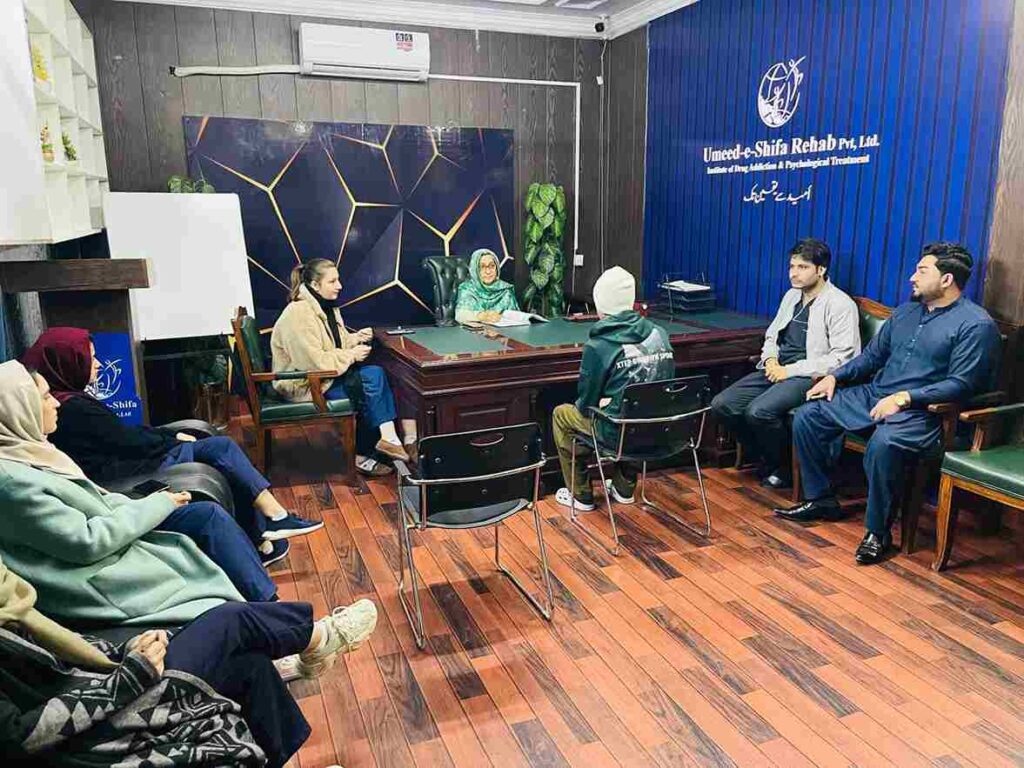
Umeed-e-Shifa: Rehab Center in Bani Gala, Islamabad
Uncategorized

Umeed-e-Shifa: Rehab Center in Bani Gala, Islamabad

A family member has a problem. You’ve started searching, and within ten minutes every result looks the same: peaceful hills, confidential care, 24/7 availability, a quote about hope. Rehab center in Bani Gala, Islamabad are all saying nearly identical things, and you still don’t know which one is actually right for your situation. That’s the real problem with this search. Not a lack of options — too many options that sound interchangeable. This guide breaks down what actually differs between rehab centers in Bani Gala, what questions cut through the marketing language, and how to match a facility to the specific situation you’re dealing with — whether that’s alcohol, opioids, ICE, or a mental health condition that’s gotten harder to manage. Why Bani Gala Became Islamabad’s Rehab Hub Bani Gala is a hillside area on the edge of Islamabad, bordering the Rawal Lake. Over the past decade, it’s become the default location for private rehabilitation centers in the city — and that’s not an accident. Three factors drove this concentration. First, land availability: Bani Gala has larger plots and lower density than central Islamabad sectors, which suits facilities that need residential space, gardens, and separation between patients. Second, distance from urban noise: most clinical literature on addiction recovery points to environment as a meaningful factor in early recovery, and a quieter setting genuinely helps some patients. Third — and this is less discussed — privacy. Bani Gala’s layout means a person can be admitted and discharged without their neighbors in F-7 or F-8 ever knowing. Multiple centers operate in the area, including Federal City Rehab Clinic (FCRC), Hayat Rehab Center, Islamabad Rehab Clinic (IRCL), Lifeline Rehab Center, and Umeed-e-Shifa Rehabilitation Center, among others. They’re not interchangeable, even though their marketing often reads that way. What “Rehab Center” Actually Means — And Where the Definitions Diverge A rehab center is a facility that provides structured treatment for substance use disorders and, in many cases, co-occurring mental health conditions, combining medical supervision with therapeutic intervention. That’s the textbook definition. In practice, “rehab center” in Bani Gala covers a wide range of actual setups — and this is where most people get caught out. Some facilities are primarily residential — comfortable accommodation with therapy sessions layered on top, light medical oversight, and a focus on environment as the main therapeutic tool. Others are built around psychiatric and medical infrastructure first, with residential comfort as secondary. Both call themselves “rehab centers.” Both will use words like “executive,” “luxury,” and “world-class.” The difference matters enormously depending on what you’re dealing with. If the situation involves ICE (crystal meth), opioid withdrawal, or a diagnosed psychiatric condition alongside substance use — what’s clinically called dual diagnosis — the medical infrastructure isn’t optional. It’s the entire point. If the situation is earlier-stage, primarily about structure, accountability, and a break from environment, a residential-first facility may genuinely be the better fit. Neither type of center will tell you which category they fall into using these terms. You have to ask directly. The Five Questions That Actually Separate These Centers Every rehab center’s homepage says “confidential,” “24/7,” and “experienced team.” None of that differentiates anything — every facility in Bani Gala says it, because it’s table stakes, not a selling point. Here’s what actually differs, and what to ask before you commit to a consultation: ICE Addiction: Why This Specific Situation Changes the Recommendation Entirely If the person you’re concerned about is using ICE (crystal methamphetamine), the calculus around which rehab center to choose shifts — and most general guides don’t address this directly. ICE use disorder commonly involves ICE psychosis — a state of paranoia, hallucination, or agitation that can occur during use or in the early withdrawal period. This is fundamentally different from alcohol or opioid withdrawal, which are primarily physical processes with well-established medical protocols. ICE-related psychosis is a psychiatric emergency in its own right, and it requires a facility where psychiatric assessment and intervention are available immediately — not scheduled. According to the UNODC World Drug Report 2024, methamphetamine use has been identified as one of the fastest-growing substance use trends across South Asia, including Pakistan, over the past several years. This isn’t an abstract statistic — it’s the reason several Bani Gala facilities have specifically built out ICE-focused programmes in the last two to three years, where five years ago most centers were structured primarily around alcohol and opioid cases. The practical takeaway: if ICE is the substance involved, a facility’s general “addiction treatment” claim isn’t enough. Ask specifically how they manage psychiatric symptoms during the acute phase, and whether a psychiatrist — not just a counselor or addiction specialist — is involved from day one. Cost Reality: What Affects the Number You’ll Actually Be Quoted Factor How It Affects Cost What to Ask Programme length 30-day programmes cost less upfront than 90-day, but 90-day programmes often have better completion and relapse-prevention outcomes for moderate-to-severe cases Ask whether 30 days is a genuine recommendation for this case or a starting offer Room type Private rooms cost more than shared accommodation; this can be a meaningful percentage difference Ask for both private and shared pricing upfront Medical complexity Dual diagnosis cases (addiction + psychiatric condition) typically require more psychiatric time, which affects cost Ask if psychiatric assessment is included in the base programme cost or billed separately Detox phase Medically supervised detox for opioids or alcohol may be priced as a separate initial phase Ask if detox is included in the programme price or an add-on Family therapy / involvement Some facilities include structured family sessions; others charge separately or don’t offer them Ask specifically — family involvement is a significant factor in long-term outcomes Pricing for any specific facility should always be confirmed directly and currently with that facility — costs and what’s included can change, and this table reflects the categories that affect cost, not specific figures for any center. What Most Guides Get Wrong About “Confidentiality” Every rehab center in Bani Gala

Heroin Addiction Treatment in Islamabad | Umeed-e-Shifa
Heroin Addiction Treatment

Heroin Addiction Treatment in Islamabad | Umeed-e-Shifa

There is a specific kind of exhaustion that comes with loving someone who is addicted to heroin. Families often find themselves exhausted after trying countless ways to help a loved one overcome addiction. From heartfelt discussions to moments of frustration and quiet hope, the challenges can feel overwhelming when lasting change does not come. None of it worked. So now you are here, searching for a rehab center in Islamabad at whatever hour it happens to be, trying to figure out what to do before the situation gets any worse. This guide is written for you. Not for someone doing academic research. Not for someone mildly curious. For families in Pakistan who are past the point of denial and need real, clear information about heroin addiction treatment, what it actually involves, and how Umeed-e-Shifa Rehabilitation Center in Bani Gala, Islamabad can help. We will not waste your time with vague encouragement or generic advice you have already read ten times. Let us get straight into it. “Is It Really Heroin?” Signs Pakistani Families Often Miss for Years Most families do not connect the dots right away. A son who has become withdrawn gets written off as stressed from work or university. A husband who keeps disappearing for hours is assumed to be dealing with personal issues. The weight loss gets blamed on poor eating. The mood swings get blamed on everything except the real cause. By the time a Pakistani family walks into a rehab center like Umeed-e-Shifa, months and sometimes years have already passed. The addiction is deep by then. And almost every family says the same thing: “We noticed something was wrong much earlier, but we did not want to believe it.” So here are the signs. Not the vague ones you find on generic websites. The specific ones: If most of that list sounds familiar, you are not looking at a stress problem or a personality change. You are looking at opioid dependence. And it does not get better without proper treatment. Call Umeed-e-Shifa on WhatsApp or phone right now: +92 3104000444 Why Heroin Is So Difficult to Quit (This Is Not About Willpower) A lot of Pakistani families, once they realize what is happening, respond with ultimatums. “Stop or I will do this.” “You have to choose.” “Just stop.” It comes from love. It also does not work, and understanding why matters. Heroin attaches to specific receptors in the brain and floods the system with a level of artificial reward that nothing natural can match. The brain, which is highly adaptive, responds by shutting down its own natural production of feel-good chemicals. It recalibrates entirely around the drug. After that point, the person is not choosing heroin over family. They are choosing heroin over physical agony. Within hours of the last dose, withdrawal starts: bone pain, muscle cramps, severe anxiety, insomnia, uncontrollable nausea, and cravings that feel physically unbearable. Most people who try to quit at home make it two or three days before the pain becomes unmanageable. The drug is right there. The withdrawal ends instantly. This is why “just stopping” fails almost every time without medical support. It is physiology, not character. Proper medical detox manages this withdrawal safely, reduces the physical suffering significantly, and gets the person to a point where actual recovery work can begin. What Proper Heroin Treatment Looks Like at Umeed-e-Shifa A lot of places in Pakistan that call themselves rehab centers are essentially doing one thing: waiting for the drugs to leave the body. That is detox. It is necessary, but it is the beginning, not the treatment. What separates a genuine recovery program from a short-term detox stay is everything that happens after the physical withdrawal ends. Here is how Umeed-e-Shifa structures treatment. First: A Real Medical and Psychological Assessment When someone arrives at Umeed-e-Shifa, the first thing the clinical team does is assess them properly. Not a brief intake form. A thorough evaluation that looks at the severity and duration of the addiction, the person’s physical health, their mental health history, any previous attempts at quitting, and any underlying psychological issues. This matters because two people with the same number of years of heroin use can need completely different treatment approaches. One might have significant trauma driving the addiction. Another might have an undiagnosed depressive disorder. Without understanding what is actually going on, treatment is guesswork. Dr. Anwar Ul Haq, Umeed-e-Shifa’s consultant psychiatrist who trained in the UK and holds MRCPsych qualification alongside his MBBS, leads this evaluation. That level of psychiatric expertise is not something most rehab facilities in Islamabad offer. Second: Medically Supervised Detox, Done Properly Detox at Umeed-e-Shifa is not a locked room with staff checking in occasionally. Doctors and medical officers monitor the patient continuously. Medications are used to manage withdrawal symptoms and reduce suffering. Vital signs are tracked. Psychological support is available throughout because withdrawal is as much a mental experience as a physical one. The acute withdrawal phase for heroin typically runs 7 to 14 days depending on the severity of dependence. The 30-day detox program at Umeed-e-Shifa covers this phase plus a period of early stabilization and initial psychological assessment. For families considering the 30-day program: it is appropriate for early-stage cases or as a starting point. For someone with a long history of use or prior relapses, it is the entry point into a longer program, not the complete treatment. Third: Treating What Was Underneath the Addiction This is the part most facilities skip, and it is the part that determines whether someone stays sober after discharge. A very significant number of people using heroin in Pakistan started using it to manage psychological pain that had never been properly addressed. Depression. Anxiety that never got diagnosed. Trauma from things that happened years ago. Grief that had nowhere to go. The heroin was not the problem. It was the solution to a problem that was already there. If you treat the addiction without treating what was driving it, the

Scroll to Top