
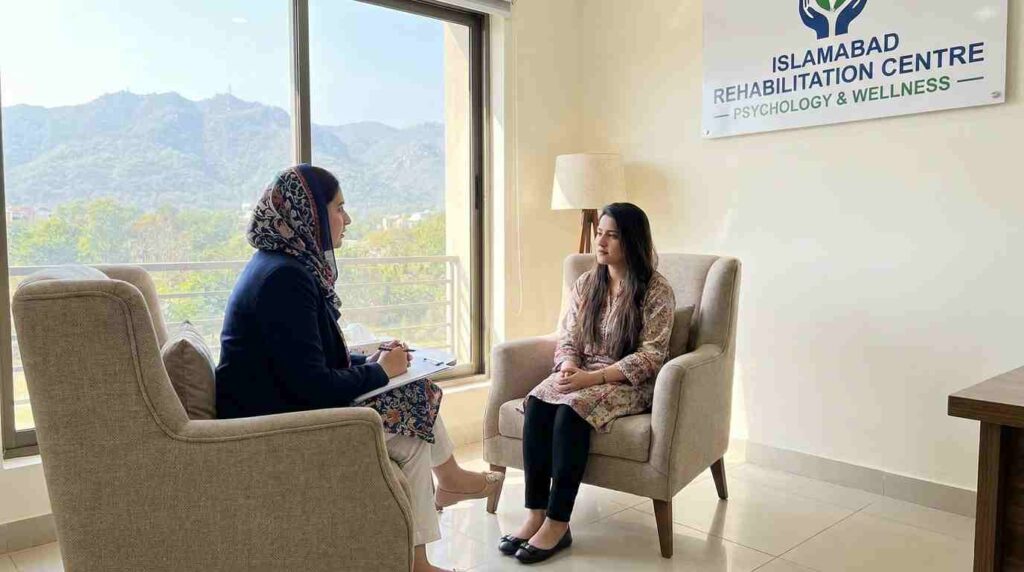
What to Know Before Choosing a Rehab Center with a Female Psychologist in Islamabad
A family calls a rehabilitation center in Islamabad asking one question: is there a female psychologist available? The staff says yes. The patient arrives. The female staff member turns out to be a nurse, not a licensed psychologist. This happens more often than facilities will admit. For women seeking mental health treatment in Pakistan, this distinction is not a preference. It is a clinical requirement. This guide covers what a proper rehab center with female psychological support actually looks like, what to verify before admitting a patient, and which areas of Islamabad currently offer legitimate options.
Why a Female Psychologist Matters in Pakistani Rehab Settings
In Pakistani culture, a woman discussing trauma, substance use, or mental illness with a male clinician is not just uncomfortable. For many patients, it is a barrier that stops treatment from working at all. Research published in the Journal of Substance Abuse Treatment (2022) found that gender-concordant therapy significantly improved treatment retention among women in South Asian clinical contexts. Retention is the metric that matters most in rehab. A patient who leaves early does not recover.
The Clinical Gap That Exists Right Now
Most drug rehabilitation centers in Islamabad were designed around male patient populations. Female wards were added later, often without dedicated female clinical staff. What this means in practice: a facility might have female dormitories, female nurses, and female support workers, but the licensed psychologist conducting one-on-one sessions is still male. That is not a female psychological care facility. That is a facility with female accommodation.
In reviewing how similar centers operate across South Asia, a consistent pattern appears. The facilities that actually deliver gender-appropriate psychological care tend to be smaller, privately operated, and more expensive. Budget centers cut corners on licensed female clinicians first because these staff are harder to recruit and retain.
What Licensing Actually Means in Pakistan
A psychologist in Pakistan should be registered with the Pakistan Psychological Association (PPA) or hold a recognized clinical degree. An M.Phil. or Ph.D. in clinical psychology is the standard. Many facilities in Islamabad employ counselors with BSc degrees in psychology. These are not the same thing. A counselor can provide structured support. A clinical psychologist can diagnose, design treatment plans, and manage complex co-occurring disorders such as depression alongside addiction. Ask the facility for the qualification and registration number of the female clinician. If they cannot provide it, that is your answer.
What Legitimate Rehab Centers with Female Psychologists Offer
A properly equipped rehab center in Islamabad that genuinely serves female patients will provide all of the following. This is not a wish list. It is the operational baseline.
- Individual therapy sessions conducted by a licensed female clinical psychologist
- Gender-segregated group therapy sessions with female facilitation
- A separate female residential ward with privacy controls
- Female nursing staff on all shifts, not just day shifts
- A female psychiatrist or a clear referral protocol to one for medication management
- Family therapy with cultural sensitivity built in, not bolted on
Centers that check only three or four of these boxes are partial solutions. For patients with trauma histories, incomplete solutions often cause harm.
Rehab Center Bani Gala and the Areas Worth Investigating
Bani Gala and its surrounding zones on the outskirts of Islamabad have become a cluster location for private residential rehab facilities. The geography is deliberate. Distance from the city provides privacy. The physical separation also reduces triggers for patients in early recovery.
Several private rehabilitation centers operating in and near Bani Gala have invested in female clinical staff specifically because demand from female patients has grown since 2022. According to the Drug Regulatory Authority of Pakistan (DRAP), the number of registered treatment facilities nationwide increased by over 30 percent between 2020 and 2024, with a growing proportion serving female patients.
Before visiting any facility in this area, call and ask these four questions:
- What is the full qualification of your female psychologist?
- How many individual therapy sessions per week does a female patient receive?
- Is the female psychologist present on-site daily or on scheduled days only?
- Does your facility have a separate female ward with 24-hour female nursing staff?
Any hesitation or vague response to these questions is a red flag worth taking seriously.
Comparing Facility Types Available in Islamabad
Not every family is looking for the same thing. Cost, location, duration, and clinical intensity all vary. Below is a realistic comparison of the facility types currently available for women seeking rehab in Islamabad.
| Facility Type | Typical Duration | Female Psychologist | Estimated Cost (PKR/month) | Best For |
|---|---|---|---|---|
| Government-run rehab | 30-90 days | Rarely available | 5,000-20,000 | Patients with no financial resources |
| Mid-tier private center | 30-60 days | Sometimes available | 80,000-150,000 | Families with moderate budgets |
| Premium private facility | 45-90 days | Usually available | 200,000-400,000 | Patients needing full clinical team |
| Outpatient clinic with psychologist | Ongoing | More consistently available | 3,000-8,000/session | Patients post-residential treatment |
Verify all current pricing directly with the facility before committing. Costs shift based on room type, medication included, and clinical intensity.
What the Best Drug Rehabilitation Centers in Islamabad Do Differently
The facilities that consistently produce better outcomes share a few operational patterns that are easy to overlook when you are in a crisis moment and simply trying to find a bed.
First, the best centers conduct a proper intake assessment before admission, not after. They want to know the patient’s history before placing her. Centers that skip this step are running occupancy-first operations.
Second, they have a discharge plan ready before the patient leaves. Recovery does not end at the facility gate. Without structured aftercare, relapse rates within 12 months in Pakistan are estimated to be above 60 percent by addiction medicine practitioners working in the country.
Third, they are honest about what they cannot treat. A good rehab center will refer a patient to a psychiatric hospital if she presents with severe psychosis or suicidal crisis. A bad one will keep her in the facility and bill accordingly.
If a center promises guaranteed recovery, leave.
Mental Health Treatment in Pakistan for Women: The Honest Picture in 2026
Pakistan’s Mental Health Ordinance of 2001 remains the primary legal framework governing mental health care. A long-awaited updated mental health law has been discussed at the federal level but has not yet passed as of mid-2026. This matters because it means regulatory enforcement of quality standards in private rehab centers remains inconsistent.
The gap between what a facility advertises and what it delivers is still wide in many cases. Female patients bear a disproportionate share of that gap. Cultural stigma means fewer women seek treatment, which means fewer facilities have invested in proper female clinical infrastructure.
That said, the landscape is improving. Facilities that have added licensed female psychologists in the last three years are seeing higher patient volumes from female referrals. Demand is creating supply, slowly.
If you are conducting due diligence right now, do not rely on online reviews alone. Google Maps reviews for rehab centers in Pakistan are often written by facility staff or families of patients who did not stay long enough to evaluate outcomes. Visit the facility in person before admission if at all possible.
A Practical Checklist Before Choosing a Rehab Center
Use this before signing anything or making a deposit.
- Confirm the female psychologist’s qualification, registration, and on-site schedule in writing
- Ask for a sample weekly schedule for female patients
- Inspect the female ward yourself, not just photos
- Ask how they handle psychiatric emergencies at night
- Confirm what is included in the quoted fee and what is billed separately
- Ask for the name and contact of their preferred psychiatric referral
- Request to speak with the clinical director, not just the admissions coordinator
- Ask what their success definition is and how they track it
A serious facility will welcome these questions. A facility with something to hide will become evasive.
Conclusion
Finding a rehab center with a female psychologist in Islamabad is possible. It requires more due diligence than a standard web search, and it requires knowing exactly what to ask. The facilities that genuinely serve women with licensed clinical staff do exist, particularly in the private sector around areas like Bani Gala and the broader Islamabad region. But they are not all equal, and marketing language does not substitute for verified credentials.
If you are making this decision for a family member, prioritize clinical qualifications over facilities, privacy over prestige, and honest aftercare planning over admission promises. The right facility will not pressure you to decide quickly.
The best decision is a verified one.
FAQ SECTION
Q1: What qualifications should a female psychologist at a rehab center in Islamabad have? A licensed clinical psychologist in Pakistan should hold at minimum an M.Phil. in clinical psychology and ideally be registered with the Pakistan Psychological Association. A BSc in psychology alone does not qualify someone to conduct clinical therapy or create treatment plans for substance use or mental health disorders. Always ask for the specific degree, university, and registration number before admission.
Q2: Is there a difference between a female counselor and a female psychologist in a rehab center? Yes, and it is a significant one. A counselor provides structured emotional and behavioral support, often using fixed frameworks. A clinical psychologist can assess, diagnose, and design individualized treatment for complex conditions including depression, trauma, and addiction. If a facility lists a “female counselor” and not a “female psychologist,” clarify the distinction before proceeding.
Q3: Are there government rehab centers in Islamabad with female staff? Government-operated rehabilitation centers in Islamabad do exist, but dedicated licensed female psychologists are rare in these settings. They typically lack the clinical staffing that private facilities have. For female patients requiring gender-appropriate psychological therapy, government facilities are generally not the first choice unless cost is the primary constraint.
Q4: How much does a private rehab center with a female psychologist cost in Islamabad? Mid-tier private facilities range from approximately PKR 80,000 to 150,000 per month. Premium residential centers with full clinical teams including female psychologists can cost PKR 200,000 to 400,000 per month. Costs vary based on room type, medications included, and session frequency. Always request a full itemized fee breakdown before committing.
Q5: How do I verify that a rehab center actually has a female psychologist and not just female support staff? Ask the facility directly for the psychologist’s full name, qualification, degree institution, and registration number. Then verify independently if possible through the Pakistan Psychological Association. Ask whether the psychologist is on-site daily or visits on specific days only. If the center cannot provide written confirmation of credentials, treat it as a red flag.
Q6: What is the typical length of stay at a rehab center in Islamabad for women? Most residential programs run between 30 and 90 days. The appropriate duration depends on the severity of the condition, co-occurring mental health issues, and progress in therapy. Shorter stays below 30 days are generally not sufficient for lasting recovery. The best facilities base discharge timing on clinical assessment, not on a fixed calendar date.
Q7: Can a family member stay involved during treatment at a rehab center in Islamabad? Yes, at most private facilities. Better centers include structured family therapy as part of the treatment plan. This is especially important in Pakistani cultural contexts where family dynamics often play a direct role in both the causes of and recovery from mental health conditions. Ask specifically whether family sessions are included in the fee or billed separately.
Q8: What happens if a female patient has a psychiatric emergency at the facility? Ask this directly before admission. A serious facility will have a clear protocol: a partnered psychiatric hospital, an on-call psychiatrist, or both. Facilities that cannot answer this question clearly should not be handling patients with severe mental health needs. This question separates clinically responsible centers from occupancy-focused ones.
Q9: Is outpatient therapy with a female psychologist in Islamabad a viable alternative to residential rehab? For patients with moderate conditions or as a step-down after residential treatment, outpatient therapy with a licensed female clinical psychologist is a strong option. Session costs typically range from PKR 3,000 to 8,000. This format works best for patients with stable home environments and no immediate risk of relapse or self-harm.
Q10: Why do some rehab centers in Islamabad advertise female psychologists but do not actually have them on-site daily? Cost is the primary reason. Licensed female clinical psychologists are in short supply in Pakistan and command higher salaries. Some facilities hire one on a part-time or visiting basis to satisfy a marketing claim without the overhead of a full-time appointment. Always confirm on-site availability and session frequency in writing before admission.