
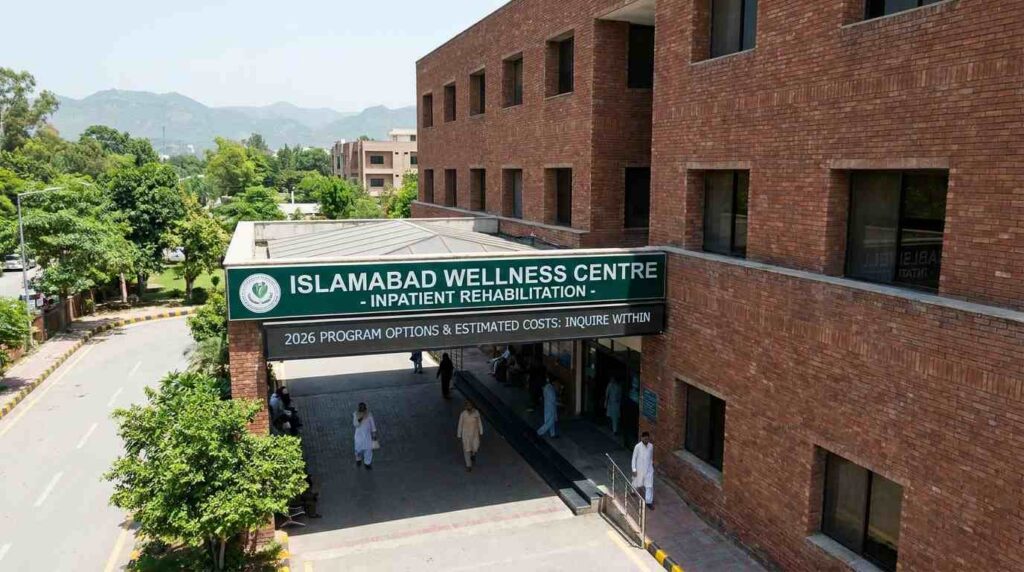
Inpatient Rehab Islamabad: What Families Need to Know Before Admitting Someone
Your brother agreed to get help. Finally. But now you’re holding a phone, staring at a list of rehab centres in Islamabad, and you have no idea which ones are legitimate. Every website says the same thing: “best facility,” “holistic care,” “call now.” None of them tell you what inpatient rehab actually looks like, what it costs, or how to tell if a centre will help rather than harm.
This guide answers those questions. You’ll understand what inpatient treatment involves, which facilities in Islamabad are verifiably real, what you’ll pay in 2026, and how to separate a proper medical programme from a locked room with a prayer schedule. No soft language. Just the information you need to make a decision that sticks.
What Inpatient Rehab Actually Means
Inpatient rehabilitation is a structured treatment programme where the patient lives at the facility full-time, typically for 30 to 90 days, and receives 24-hour medical and psychological care. It is the highest level of addiction treatment available in Pakistan outside a hospital psychiatric ward.
The defining feature of inpatient rehab is the controlled environment. The patient is removed from triggers: the neighbourhood dealer, the friends who still use, the family dynamics that enabled the addiction. Every hour of the day is structured. Medical detox happens under supervision. Therapy sessions run daily. Meals, sleep, and activity are all regulated.
This matters because addiction is not just a physical dependency. It is a set of behaviours, routines, and coping mechanisms that have been reinforced for years. Breaking those patterns requires more than willpower. It requires distance, time, and professional intervention. Outpatient programmes, where the patient attends therapy a few times a week but lives at home, can work for mild cases with strong family support. They fail routinely for moderate to severe addiction, for dual diagnosis cases, and for anyone who has relapsed after previous treatment.
If the person you’re worried about has been using heavily for more than a year, has tried to stop and failed, or is using opioids, methamphetamine, or alcohol at dangerous levels, inpatient rehab is not a preference. It’s a medical necessity.
What Happens During Inpatient Treatment
Treatment unfolds in three clear stages. Understanding them helps you evaluate whether a facility is offering a genuine programme or cutting corners.
The first stage is medical detoxification. When someone who is physically dependent on a substance stops using, the body reacts violently. Opioid withdrawal causes severe muscle pain, diarrhoea, vomiting, cold flashes, and insomnia. Alcohol and benzodiazepine withdrawal can cause seizures, cardiac stress, and in severe cases, death. Detox under medical supervision uses medications like clonidine, chlordiazepoxide, and ibuprofen in tapering doses to manage symptoms while vital signs are monitored continuously. This stage lasts 7 to 14 days. Attempting it at home is not just painful. It’s dangerous.
The second stage is active rehabilitation. Once the substance is cleared from the body and acute withdrawal has passed, the psychological work begins. This is where the patient engages in individual cognitive behavioural therapy, group counselling sessions, family therapy, and structured wellness activities. The goal is not just abstinence. It is understanding the emotional and situational triggers that drove the addiction, developing new coping mechanisms, and beginning to repair the damage the addiction caused to relationships and self-worth.
The third stage is aftercare planning. A patient who walks out of a facility after 30 days is medically stable but psychologically raw. The coping mechanisms are new and fragile. If they return to the same environment with no structured support, relapse is almost certain. A proper programme builds an aftercare plan before discharge: scheduled outpatient sessions, a written relapse prevention strategy, family agreements about boundaries, and a connection to ongoing support. The ANF Rehabilitation Centre in Islamabad tracks patients for up to two years post-discharge, a model that significantly improves long-term outcomes. Private facilities that offer no structured aftercare are delivering an incomplete service.
What Inpatient Rehab Costs in Islamabad in 2026
Cost depends entirely on whether you go through the public or private system. The gap between the two is enormous.
The Anti-Narcotics Force (ANF) Drug Treatment and Rehabilitation Centre in Model Town Humak provides completely free inpatient treatment. The centre has operated since 2005 and has successfully rehabilitated more than 11,000 individuals. Treatment includes accommodation, meals, medical detox, psychological therapy, and two years of post-discharge follow-up, all at zero cost to the patient or family. The centre employs qualified MBBS doctors, psychologists, and trained staff available around the clock. Eligibility is limited to Pakistani citizens aged 18 to 48. The facility is currently expanding to accommodate 100 patients, with dedicated capacity for 60 men and 40 women and children. The ANF helpline at 1415 provides confidential admission guidance.
In the private sector, costs vary sharply by facility, programme length, and level of medical staffing. A standard 30-day inpatient programme for substance use disorder typically costs between PKR 80,000 and PKR 300,000. Luxury facilities in Bani Gala with private rooms, gym access, and foreign-qualified specialists charge significantly more. Some facilities offer subsidised or sliding-scale rates. Safe Care Trust International, for example, charges approximately 65% of patients only a nominal fee for food and accommodation, with all medical and counselling services provided free of charge.
Always verify current pricing directly with the facility before committing. A facility that refuses to provide a written cost breakdown before admission should be treated with caution.
Known Inpatient Facilities in Islamabad
Islamabad has a substantial concentration of rehabilitation centres. The Islamabad Healthcare Regulatory Authority (IHRA) coordinates with 42 registered drug rehabilitation centres in the capital. Not all are equal in quality, staffing, or treatment philosophy.
Lifeline Rehab Center, located in Barakahu, Bani Gala, operates a 100-bed luxury facility and holds dual international accreditation from ACTD USA and IHRA Pakistan. Its programme integrates medical detox, residential treatment, and outpatient services with a focus on evidence-based methods and holistic recovery. The facility has been operating for over seven years and serves a primarily male patient base.
Healing Door Rehab Center, situated on Main Jinnah Road opposite Meezan Bank in Bani Gala, is accredited by the United Nations Office on Drugs and Crime (UNODC). It treats substance use disorders, dual diagnosis, and mental health conditions including depression and anxiety. The centre offers both inpatient and outpatient programmes, with typical programme lengths ranging from 90 to 120 days, and operates a dedicated female rehabilitation service.
Hayat Rehab Clinic Islamabad (HRCI) provides comprehensive inpatient treatment for heroin and medicine dependency, behavioural disorders, and psychiatric conditions. Psychaffinity, located in Kiyani Street, Lakhwal, Bani Gala, offers 30-day residential programmes with a multidisciplinary team delivering CBT, hypnotherapy, relapse prevention counselling, and neuro-linguistic programming in a home-like environment.
New Hope Women Rehab Centre Islamabad is one of the few facilities in the capital dedicated exclusively to women. It provides 24-hour medical attention, detoxification, individual and group therapy, and family counselling in a women-only environment. For women with addiction or trauma-related conditions, a gender-specific facility removes a significant barrier to seeking treatment.
For families considering Umeed e Shifa rehab centre, verify the facility’s current IHRA registration status and clinical staffing directly before admission. The rehabilitation sector in Pakistan remains under-regulated, and a facility’s reputation from several years ago may not reflect its current operations. Ask for the registration number and cross-check it with the relevant authority before signing anything.
How to Verify a Rehab Centre Before You Pay
The rehabilitation sector in Pakistan contains both ethical, professionally staffed facilities and operations that are essentially holding cells. In 2018, the Punjab Healthcare Commission sealed five rehab centres in Lahore for lack of qualified staff, poor facilities, and illegal operation. The problem persists. A family searching for inpatient rehab in Islamabad in 2026 must still separate legitimate providers from dangerous ones.
A legitimate inpatient rehab centre must hold registration with IHRA. Ask for the registration number. Cross-check it. If the facility deflects, you have your answer.
Psychiatrists on staff should hold a PMDC-verified MBBS with FCPS or equivalent postgraduate specialisation. Clinical psychologists should hold at minimum an MS in Clinical Psychology. A facility claiming to treat dual diagnosis without a psychiatrist on staff is making an empty claim.
Visit before you commit. Walk through the sleeping quarters. Look at the bathrooms and common areas. Ask to meet the psychiatrist who will manage the case. Request a written treatment plan that specifies the detox protocol, the therapy schedule, and the aftercare structure. A facility that refuses access or cannot produce a treatment plan on request is hiding conditions.
Ask about the patient-to-staff ratio. Also ask how many individual therapy sessions the patient receives per week. And ask what happens if the patient wants to leave against medical advice. A legitimate facility answers these questions directly. One that hedges or deflects is showing you something important.
When Outpatient Rehab Isn’t Enough
Many families hope outpatient treatment will work because it allows the person to stay home, keep working, and avoid the stigma of a residential stay. For some, it does work. For many, it doesn’t.
Outpatient programmes typically fail when the addiction is severe, when the person has relapsed before, when the home environment is part of the problem, or when co-occurring mental health conditions like depression, anxiety, or trauma are present and untreated. A person with opioid use disorder who attends therapy twice a week but returns each night to a household where a spouse or parent is also using is not being treated. They’re being managed.
Inpatient rehab removes the person from the environment that sustains the addiction. It provides 24-hour accountability during the most vulnerable phase of recovery. It allows the clinical team to observe the patient’s behaviour, adjust medications, and intervene in real time. These things cannot be replicated in an outpatient setting.
The cost difference between inpatient and outpatient treatment is real. Inpatient care is significantly more expensive. But so is the cost of a failed outpatient attempt followed by a relapse, an overdose, or a family crisis that could have been avoided. The most expensive rehab is the one that doesn’t work.
Inpatient rehab in Islamabad exists. It ranges from the ANF’s completely free, government-funded programme in Model Town Humak to private luxury facilities in Bani Gala with dual international accreditation. Forty-two centres are registered with IHRA, and the quality gap between the best and the worst is wide enough to determine whether a patient recovers or relapses.
The decision that matters most is not which facility. It is whether you verified the facility before paying. Visit in person. Ask for the registration number. Meet the psychiatrist. Request a written treatment plan. If the centre cannot provide these things, it is not the right centre, regardless of what its website says.
The ANF helpline at 1415 offers a free, confidential starting point for any family in Pakistan seeking addiction treatment. For those who can afford private care, the facilities in Bani Gala and across Islamabad offer structured, evidence-based programmes. The help exists. The gap is in knowing how to find it and how to verify it. Now you know both.
FAQ Section
What is inpatient rehab and how does it differ from outpatient?
Inpatient rehab requires the patient to live at the facility full-time with 24-hour medical supervision, typically for 30 to 90 days. Outpatient allows the person to live at home and attend therapy sessions several times weekly. Inpatient provides a controlled environment away from triggers; outpatient relies on the home environment being stable and supportive.
How much does inpatient rehab cost in Islamabad in 2026?
The ANF Rehabilitation Centre in Model Town Humak provides completely free treatment including accommodation and meals. Private programmes typically cost between PKR 80,000 and PKR 300,000 for a 30-day stay depending on the facility, accommodation level, and medical staffing. Luxury facilities in Bani Gala charge more. Always request a written cost breakdown before admission.
Where can I find free inpatient rehab in Islamabad?
The ANF Drug Treatment and Rehabilitation Centre in Model Town Humak provides free medical detox, residential treatment, meals, accommodation, and two-year post-discharge follow-up. Pakistani citizens aged 18 to 48 are eligible. Contact the ANF helpline at 1415 for confidential guidance and admission information.
How do I verify if a rehab centre in Islamabad is legitimate?
Request the facility’s IHRA registration number and cross-check it. Verify that the treating psychiatrist holds valid PMDC registration. Visit the facility in person before paying anything. A legitimate centre welcomes inspection. One that refuses access or cannot provide a written treatment plan should not be trusted.
What happens during medical detox in an inpatient programme?
Medical detox lasts 7 to 14 days under 24-hour supervision. Medications such as clonidine and chlordiazepoxide are used in tapering doses to manage withdrawal symptoms. Vital signs are monitored continuously. Attempting detox at home without medical supervision is dangerous, particularly for alcohol and benzodiazepine withdrawal.
Is inpatient rehab only for drug addiction?
No. Inpatient rehab treats substance use disorders involving drugs and alcohol, as well as mental health conditions like severe depression, anxiety disorders, PTSD, and dual diagnosis cases where addiction coexists with psychiatric conditions. The structured environment benefits anyone whose condition cannot be safely managed through outpatient care alone.